Natural Light, Heat & Window
Treatments for Wave City Homes
Sunlight by window direction, glare control, curtains and blinds, ventilation and finishes, written for homes that do not all face the same way, by Shivani Mathur.
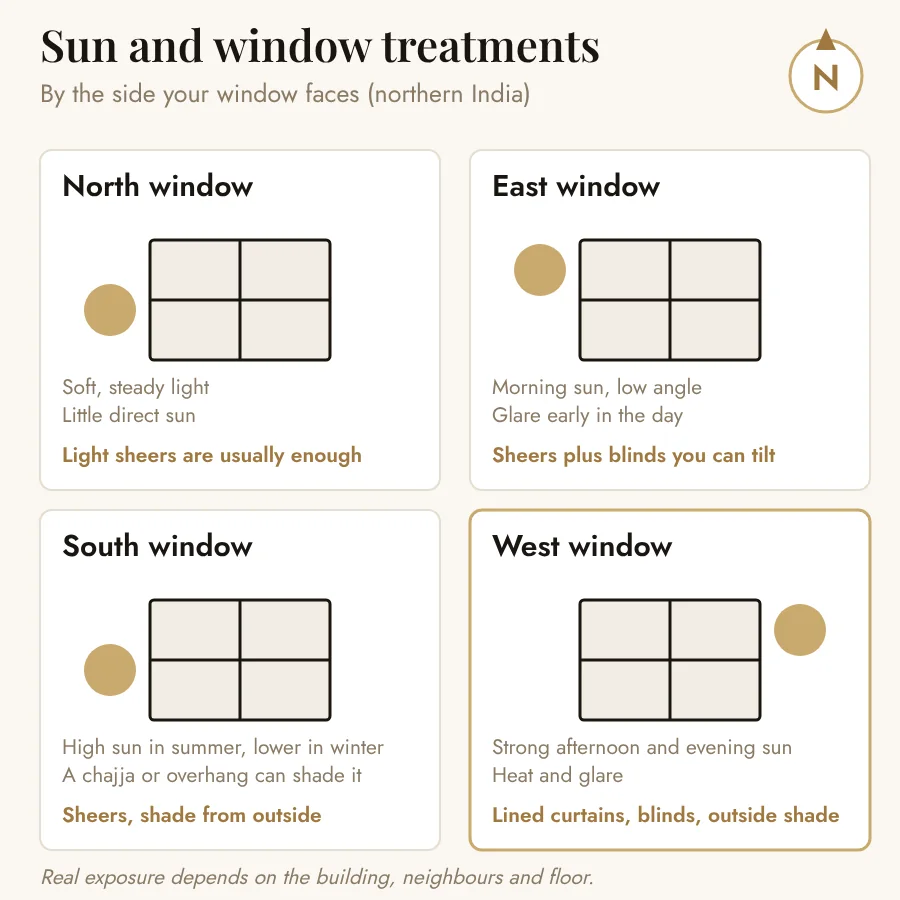
The sun reaches a window differently depending on the direction it faces: east windows take low morning sun, west windows take strong afternoon heat and glare, south windows are easier to shade, and north windows give soft steady light. Plan curtains, blinds, shading and ventilation by the actual direction of each window, not one rule for the whole home.
- East: morning sun at a low angle. Sheers plus tiltable blinds
- West: strong afternoon heat and glare. Lined curtains, blinds and outside shade
- South: high summer sun can be shaded by a chajja; lower winter sun comes in
- North: soft, steady light. Light sheers are usually enough
- Plan cross-ventilation and exhaust early
- Do not assume every Wave City home has the same exposure
DesigningAxis offers interior design and Vastu consultancy. This guide is general guidance for homes in Wave City, a township on NH-24 in Ghaziabad, and does not assume your layout: plans differ by project and by builder. It is not structural, legal or approvals advice, so confirm those with your architect and the authority. Vastu schools differ on some points, so we say "commonly suggested" where they do. We do not promise results. Climate and exposure differ from home to home, so we do not claim one condition for the whole township.
Sunlight by window direction
In northern India the sun rises in the east, climbs high in the south and sets in the west. Light and heat follow. So a window's direction tells you when it gets sun, how strong it is and what to put on it. The diagram below shows the pattern.
| Window faces | What you usually get | What helps |
|---|---|---|
| North | Soft, steady light, little direct sun | Light sheers; keep it open to enjoy the daylight |
| East | Morning sun, low angle, glare early | Sheers plus tiltable blinds; matt finishes inside |
| South | High sun in summer, lower sun in winter | A chajja or overhang outside; sheers inside |
| West | Strong afternoon and evening sun, heat and glare | Lined curtains, blinds, outside shading, reflective film if suitable |
Check your own home before you decide
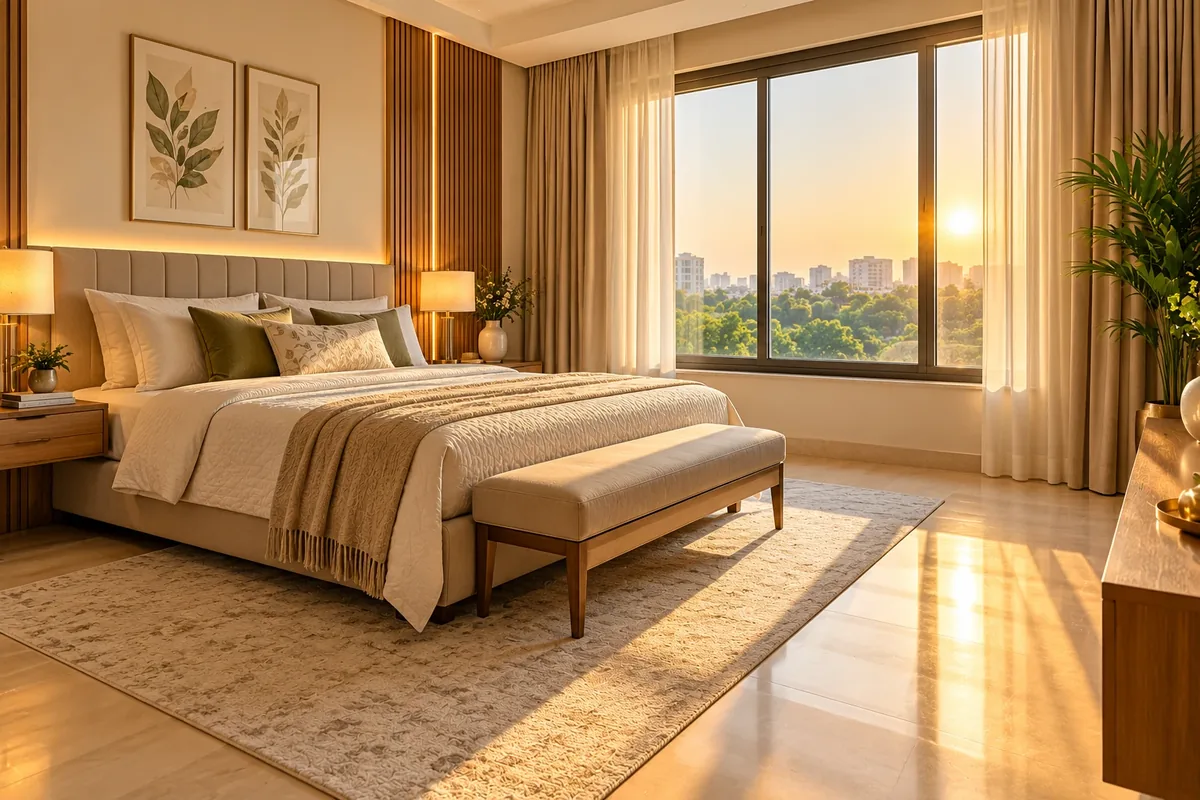
Do not rely on a general rule. Stand in each room at three times of day, say mid-morning, early afternoon and late afternoon, and note where the sun falls. Take a compass reading from the window to confirm the direction. Look at the neighbours, trees and balconies that shade you.
- Mid-morning: where does the sun fall and does it glare?
- Early afternoon: which rooms are warmest?
- Late afternoon: does the west side heat up or glare?
- Note the direction with a compass at each window
- Photograph each room at those times and keep the pictures for the designer
Glare control
Glare is light in the wrong place. It makes screens unreadable and rooms tiring. Place the TV and desk at right angles to the window, not opposite it. Use blinds you can tilt, matt finishes on walls and shelves near the window, and sheers that soften the light without darkening the room.

Curtains, blinds and sheers
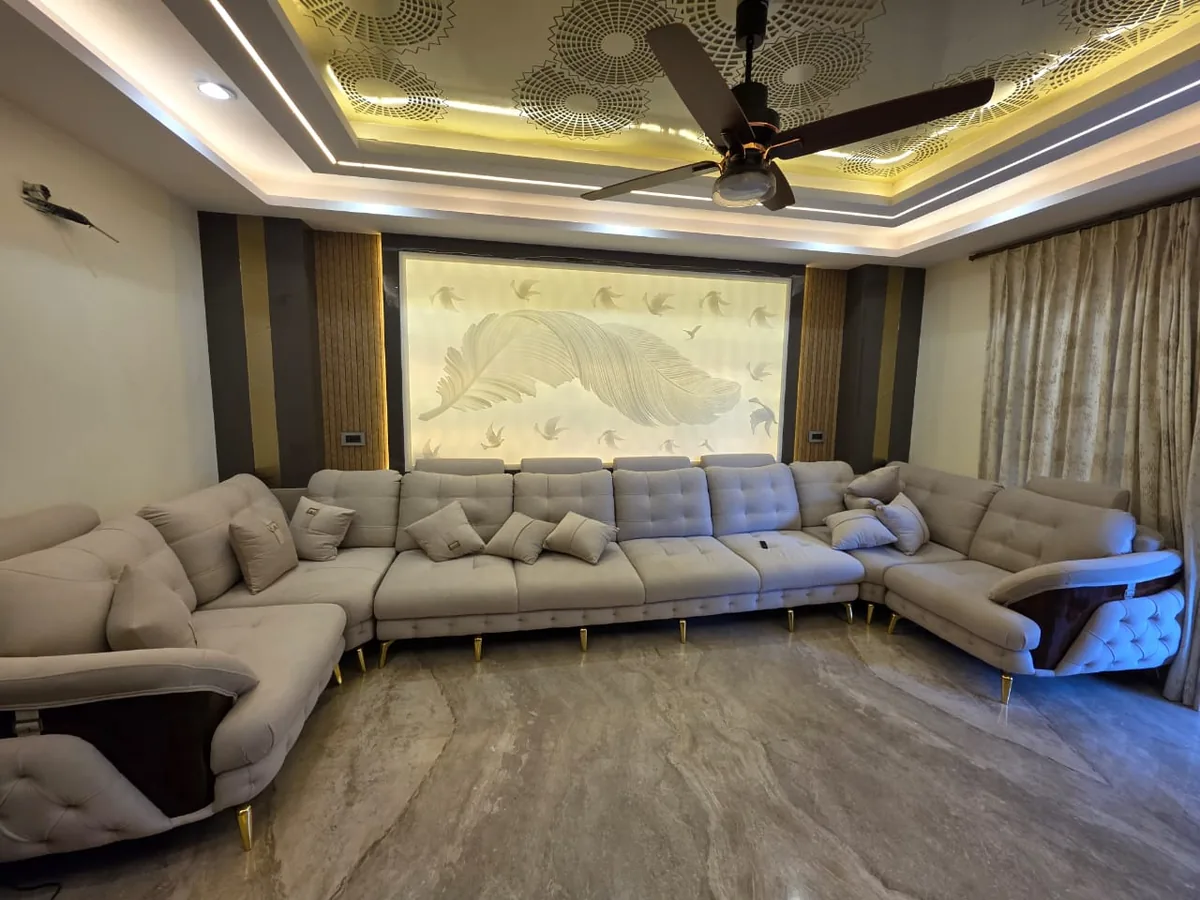
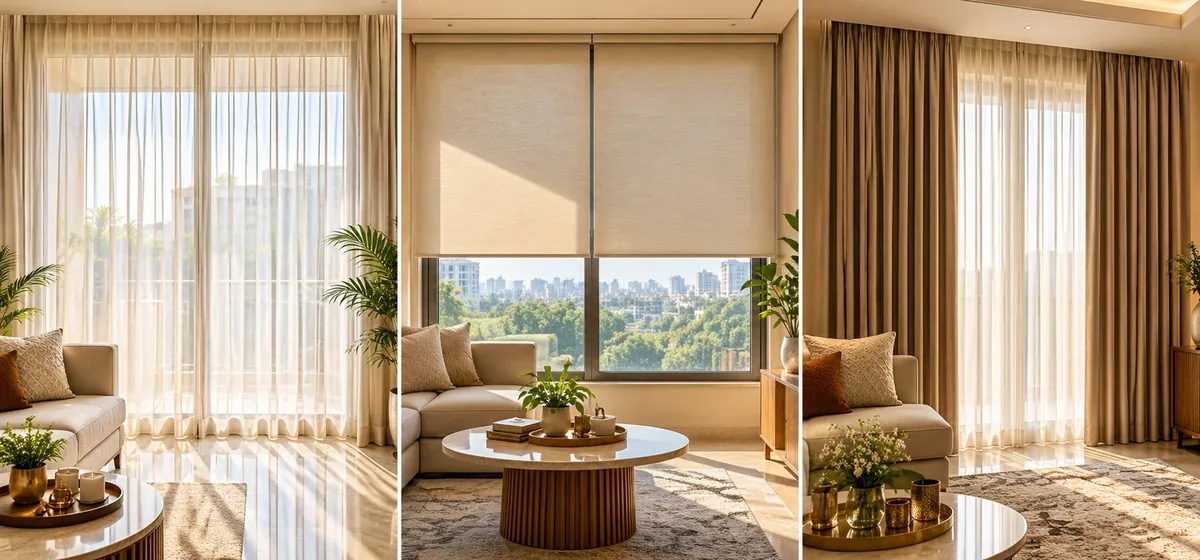
Soften daylight and keep privacy. Good for north and east rooms.
Roller, Venetian or zebra blinds give precise control over glare and privacy.
Block heat and light. Good for west rooms and bedrooms.
Many rooms work best with two layers: a sheer for daytime and a blind or lined curtain for glare, heat or sleep. Plan the curtain track or pocket during the false ceiling stage so it looks built in.
Ventilation
Fresh air matters as much as light. Open windows on opposite or adjacent sides to make a path for air. Keep the kitchen and bathroom exhausts working. Keep furniture off window openings. If only one side opens, ventilation fans and doors left ajar help.
Finishes near windows
- Choose matt or satin finishes near bright windows to limit glare
- Use sun-rated fabrics and sheers; direct sun fades dyes over time
- Protect wood and veneer from long direct sun with blinds or film
- Seal window sills and frames against monsoon splash
- Keep light curtains clear of AC drains and sills
I never recommend curtains before I have stood in the room at four in the afternoon. That is when you learn what the window is really doing.
— Shivani Mathur, Interior Designer & Vastu Consultant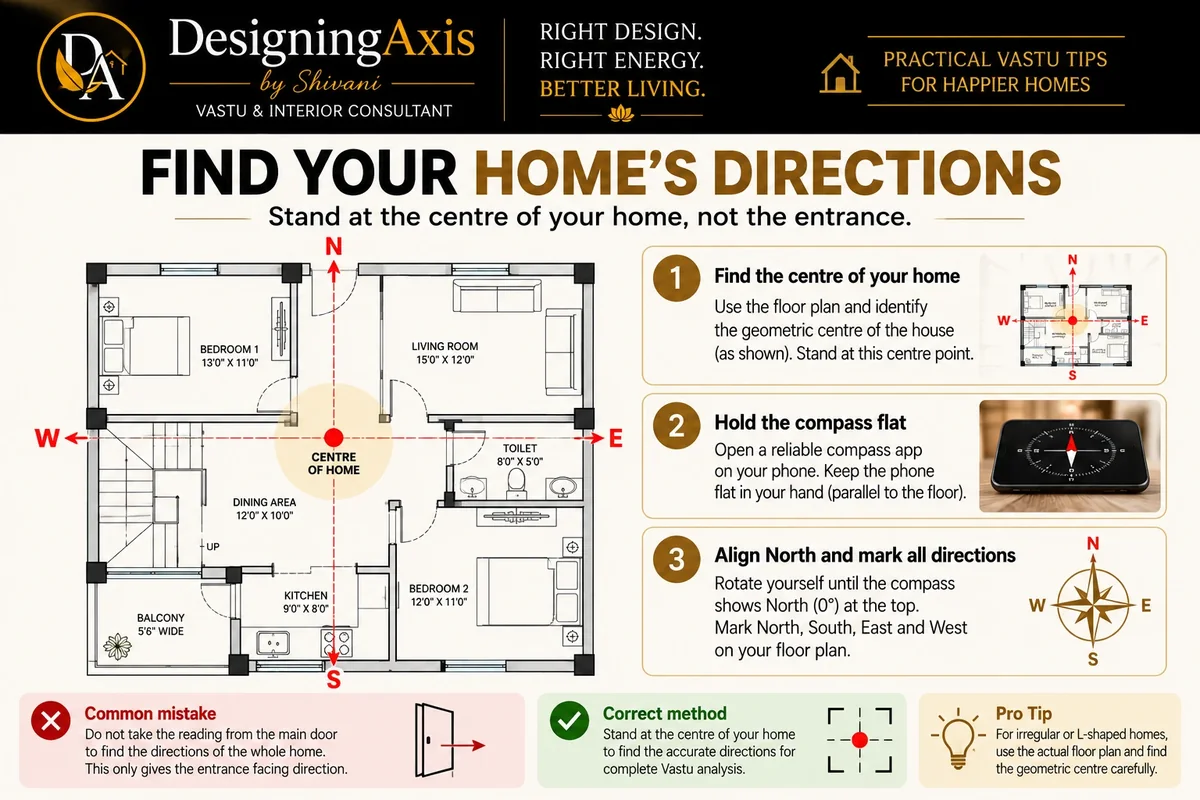
Window and light checklist
Observe
- Compass direction noted at each window
- Sun checked mid-morning, afternoon and late afternoon
- Neighbouring shade and glare noted
Plan
- Screens placed at right angles to windows
- Sheers and blinds chosen per direction
- Curtain tracks planned with the ceiling
- Cross-ventilation path identified
Finish
- Matt finishes near bright windows
- Sun-rated fabrics near west windows
- Sills and frames sealed against monsoon
Frequently Asked Questions
Which direction gets the most heat?
In northern India, west facing windows take strong sun in the afternoon and evening, and east facing windows take it in the morning at a low angle. South windows get high sun in summer and lower sun in winter. North windows get mostly soft, indirect light. Your own home also depends on the floor, the building and the neighbours.
Curtains or blinds?
Curtains give softness and can block heat and light when lined. Blinds give precise control over glare and privacy. Many rooms use both: sheers for daytime, blinds for glare, and lined curtains for west and bedroom windows.
How can I reduce glare on a TV or a laptop?
Place screens at right angles to windows, not in front of or opposite them. Use blinds you can tilt, and matt finishes on nearby walls and shelving. Avoid glossy surfaces opposite a bright window.
How do I keep a west-facing room cooler?
Shade the window from outside if you can, with a chajja or louvres, and use lined curtains or blinds inside. Reflective film can help in some cases, but ask the supplier about daylight and heat tradeoffs. Keep the room ventilated when outside air is cooler.
How do I improve ventilation in a flat?
Open windows on opposite or adjacent sides to create a path for air, keep the kitchen and bathroom exhausts working, and avoid blocking window openings with furniture. If only one side opens, ventilation fans and doors left ajar can help.
Will sunlight fade my furniture and floors?
Direct sun can fade fabrics, wood and some finishes over time. Use sheers, UV-filtering film or blinds, and rotate loose furniture. Choose finishes rated for sun exposure near large windows.
Do all Wave City homes get the same sunlight?
No. Light and heat depend on which way each home faces, the floor, nearby buildings and trees, and how large the windows are. We read your plan and your orientation rather than assume one condition for the whole township.
Planning Windows and Lighting for Your Wave City Home?
Send your floor plan with north marked. Shivani Mathur reviews the layout for Vastu and interior planning, on site across Delhi NCR including Wave City, or online anywhere in India.