Complete False Ceiling Design Guide
for Indian Homes
Types, costs, lighting integration and room-by-room design guide for false ceilings — by Shivani Mathur, Interior Designer, Ghaziabad Delhi NCR.
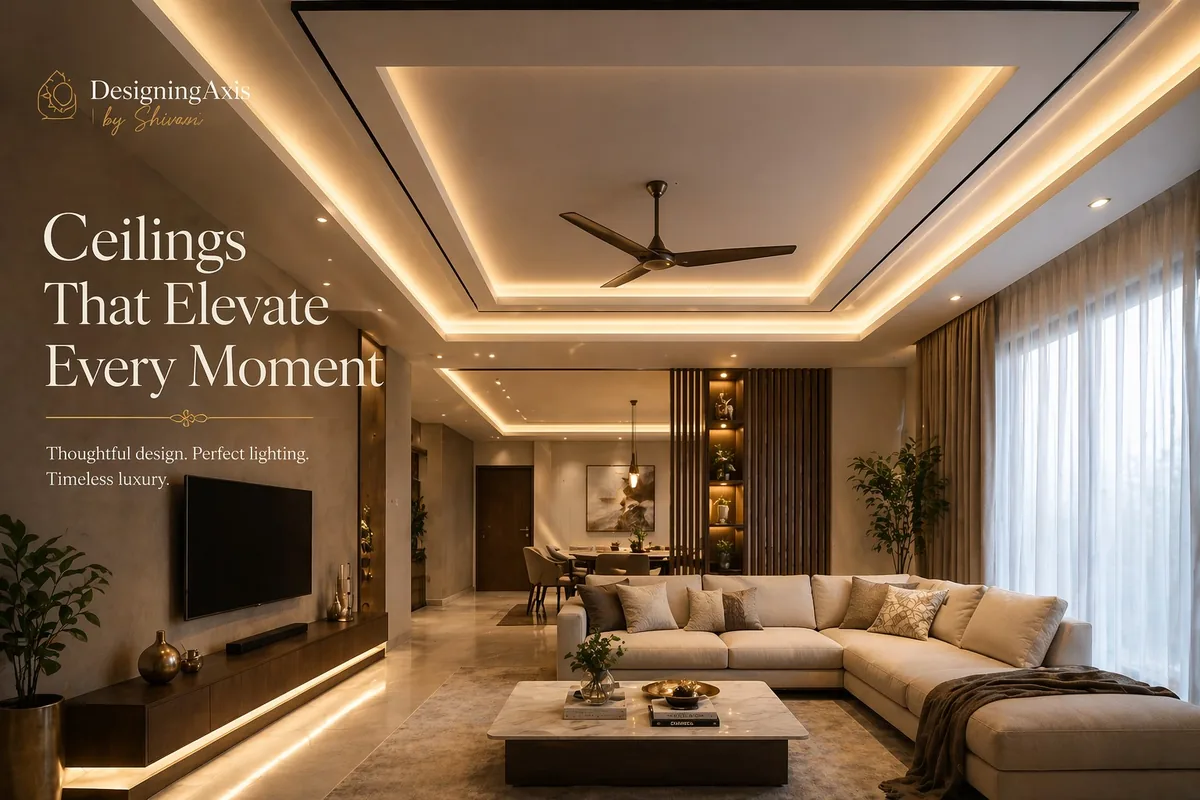
Premium false ceiling with warm cove lighting and layered downlights — by DesigningAxis by Shivani.
A well-designed false ceiling transforms a room more dramatically than almost any other single design element. It adds architectural depth, hides electrical wiring and AC ducts, creates zones within open spaces, and — most importantly — enables the warm, layered lighting that defines a luxury interior. In India, false ceilings are now standard in most new homes. This guide covers everything you need to know to design one that is both beautiful and structurally sound.
Types of False Ceiling
The type of false ceiling you choose depends on the room, the design aesthetic, and the budget. Each type has specific strengths and applications.
Gypsum Board Ceiling
The most popular choice for Indian homes. Smooth finish, excellent for cove lighting, fire-resistant and moisture-resistant variants available. Ideal for living rooms, bedrooms, and dining areas. Budget: ₹55–₹120/sq ft.
POP (Plaster of Paris)
Traditional and versatile. Excellent for decorative mouldings, cornices and intricate designs. Takes longer to execute than gypsum but allows more ornate detailing. Budget: ₹45–₹95/sq ft.
Wood / Veneer Ceiling
Premium, warm and luxurious. Used in master bedrooms, study rooms, and home offices for a natural, high-end feel. Requires moisture protection in Indian climate. Budget: ₹180–₹450/sq ft.
Grid / Modular Ceiling
Standard for offices and commercial spaces. Easy access to services above. Rarely used in premium residential spaces but practical for utility areas. Budget: ₹35–₹65/sq ft.
Stretch Ceiling
Premium European system. Translucent or printed fabric stretched across a frame. Creates dramatic backlit effects. Budget: ₹250–₹550/sq ft. Best for feature areas — not whole rooms.
Metal / PVC Panel
Durable and moisture-resistant — ideal for kitchens, bathrooms and balconies. Not recommended for living areas as they lack the warmth of gypsum. Budget: ₹70–₹150/sq ft.
Single Level vs Multi-Level Design
The number of levels in your false ceiling determines the visual complexity, the lighting possibilities, and the cost. Understanding when to use each is key to a successful design.
| Type | Best For | Key Feature | Budget Premium |
|---|---|---|---|
| Single Level Flat | Bedrooms, study rooms | Clean, minimal — hides wiring and ACs | Base cost |
| Single Level with Cove | Any room — universal | Recessed LED strip creates warm ambient glow | +15–20% |
| Two Level | Living rooms, master bedrooms | Centre drop + perimeter tray creates hierarchy and depth | +30–45% |
| Multi-Level Complex | Large living/dining, hotel-style spaces | Multiple zones, integrated lighting, architectural drama | +60–100% |
| Coffered / Tray | Premium dining rooms, home theatres | Recessed panels create a classic, formal elegance | +40–70% |
✦ Design Insight — The Cove Lighting Rule
Every false ceiling should include cove lighting — the hidden LED strip that glows warm light from within the ceiling recess. This single element is responsible for 80% of the luxury feel a false ceiling creates. A simple two-level gypsum ceiling with good cove lighting will always look more premium than an elaborate multi-level ceiling with harsh downlights only.
Lighting Integration — The Most Critical Element
False ceilings and lighting are inseparable. A false ceiling without a proper lighting plan is a wasted opportunity. The three types of lighting to integrate are:
Ambient — Cove LED Strip
The warm glow from within the ceiling cove is the ambient light of the room. Use warm white LED strips (2700–3000K) in the cove recess. This is the light that creates the luxury hotel feeling. Never use cool white LEDs in coves — it destroys the warmth entirely.
Task — Recessed Downlights
Spotlights or recessed downlights in the flat section of the ceiling provide functional, directional light. Place them over key activity areas — seating, dining table, bed. Use adjustable spotlights where possible to redirect light as furniture changes.
Accent — Pendant & Feature Lights
Pendant lights drop through the false ceiling and act as statement pieces — over dining tables, beside beds, in entrance foyers. These should be chosen before the false ceiling is designed so the wiring and cut-outs are planned from the start.
"The most important Vastu rule for false ceilings is to never create a beam effect directly over the bed, dining table, or main seating. Beams — real or created by false ceiling edges — create downward pressure energy in Vastu. Ensure the false ceiling over key activity areas is flat or recessed inward, never projecting downward."
— Shivani Mathur, Vastu ConsultantRoom-by-Room False Ceiling Guide
| Room | Recommended Design | Height Reduction | Key Lighting |
|---|---|---|---|
| Living Room | Two-level with perimeter tray + cove | 9–12 inches | Cove LED + spotlights + statement pendant |
| Master Bedroom | Two-level tray over bed area + flat perimeter | 8–10 inches | Cove LED warm + recessed over wardrobe |
| Dining Room | Single level with tray, pendant light drop | 8–10 inches | Pendant over table + cove fill light |
| Kitchen | Single flat level, PVC or moisture-resistant gypsum | 6–9 inches | Bright task lighting + under-cabinet LEDs |
| Children's Room | Single level flat with fun recessed shape options | 7–9 inches | Warm ambient + study task light |
| Bathroom | Moisture-resistant PVC panel — no gypsum | 6–8 inches | Waterproof downlights + mirror light |
| Entrance / Foyer | Tray with statement pendant or backlit panel | 8–10 inches | Dramatic pendant + cove for drama |
False Ceiling Cost Guide — NCR 2026
| Room / Area | Size | Mid-Range | Premium |
|---|---|---|---|
| Living Room | 250 sq ft | ₹35,000–₹55,000 | ₹60,000–₹1.1L |
| Master Bedroom | 180 sq ft | ₹22,000–₹38,000 | ₹42,000–₹75,000 |
| Second Bedroom | 130 sq ft | ₹15,000–₹26,000 | ₹28,000–₹50,000 |
| Dining Room | 120 sq ft | ₹14,000–₹24,000 | ₹26,000–₹48,000 |
| Kitchen | 80 sq ft | ₹9,000–₹16,000 | ₹18,000–₹30,000 |
| Full 2BHK Home | ~900 sq ft | ₹95,000–₹1.6L | ₹1.8L–₹3.2L |
*Inclusive of materials and labour. Lighting fixtures are additional. Ghaziabad/NCR rates as of April 2026.
The false ceiling is the highest-impact, best-value investment in interior design. A well-designed false ceiling with proper cove lighting costs ₹30,000–₹60,000 for a living room and elevates the perceived value of the entire home by many multiples of that investment.
Frequently Asked Questions
What is the best false ceiling material for Indian homes?
Gypsum board is the best all-round false ceiling material for Indian homes. It is smooth, fire-resistant, moisture-resistant (in the right variant), supports cove lighting beautifully, and is available across all budget ranges. For kitchens and bathrooms, use moisture-resistant gypsum or PVC panels. Avoid standard POP in high-humidity areas as it cracks over time.
How much height does a false ceiling reduce?
A standard false ceiling reduces room height by 8–12 inches depending on the design complexity. For a room with a 10-foot ceiling, the finished false ceiling height is typically 8.5–9 feet — still comfortable and often creating a cosier, more intimate feel. Avoid false ceilings in rooms with ceilings below 9 feet as the resulting height below 7.5 feet feels cramped.
Is cove lighting necessary?
Cove lighting is not structurally necessary but is the single most impactful element you can add to a false ceiling. The warm ambient glow from a cove recess is what creates the luxury hotel look that most clients are seeking. If budget is constrained, a simple single-level gypsum ceiling with cove lighting will always look better than an elaborate multi-level ceiling without cove.
What colour should a false ceiling be?
White or off-white is the standard and best choice for false ceilings — it reflects light and makes rooms feel taller. A false ceiling in a slightly warmer white than the walls creates subtle depth. Dark or coloured false ceilings can be used as a feature in specific areas (like a navy bedroom tray ceiling) but should be used with caution and only with expert guidance.
How long does false ceiling installation take?
A standard false ceiling for a 2BHK apartment (living room, 2 bedrooms, dining) takes 5–8 working days to install. Complex designs with multiple levels and detailed lighting may take 10–14 days. Painting and finishing add 2–3 more days. Plan for approximately 2 weeks from start to a fully finished, painted false ceiling.
Ready to Apply This?
Get a Personalised Consultation with Shivani Mathur
Every home is different. Shivani will assess your specific space and give you a practical, tailored plan.
Need Professional Help?
Apply these principles with expert guidance. Shivani Mathur offers personalised interior design and Vastu consultations across Delhi NCR — interior designer in Ghaziabad or interior designer in Indirapuram.