Office Vastu:
Layout, Seating & Directions
Where the owner sits, where accounts go and how to lay out an office by zone, written by Shivani Mathur from 20 years of Vastu and interior work across Delhi NCR.
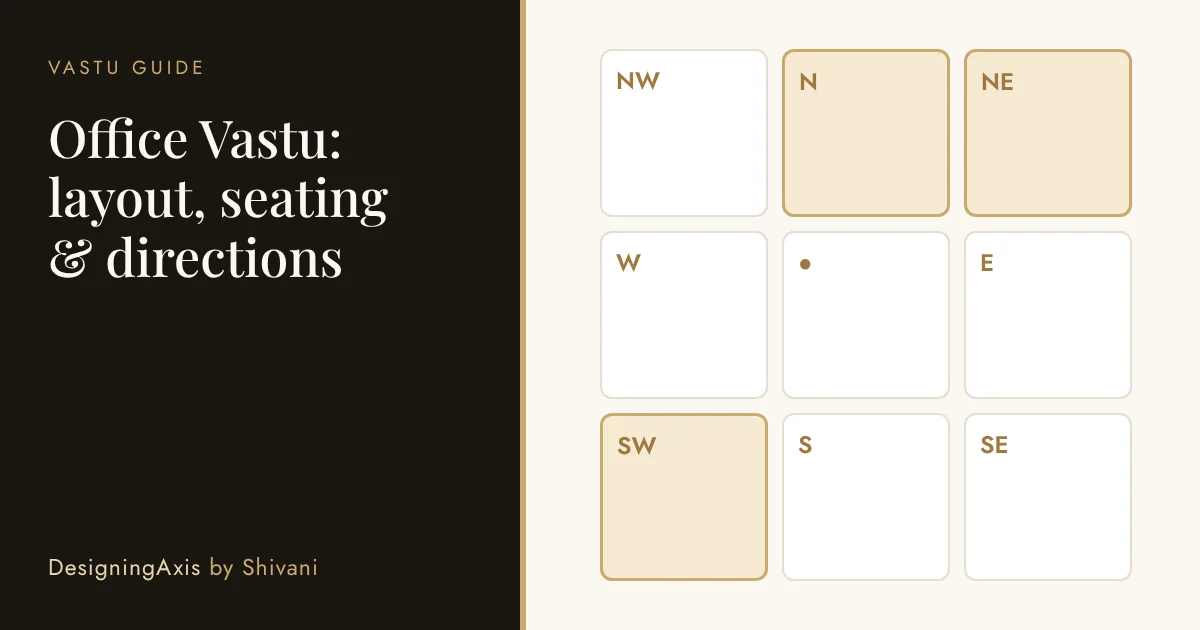
A good office Vastu plan places the owner's seat in the south-west facing north or east, keeps the entrance, reception and accounts to the north, north-east and east, and keeps the centre open. Heat-producing items such as the pantry, server and power panel go to the south-east. Safety, exits and workflow always override a directional preference.
- Owner or MD: south-west zone, face north or east, solid wall behind
- Cash and accounts: north or north-east, seat facing north or east
- Reception and waiting: north-east or east, bright and open
- Pantry, server, power: south-east
- Storage and files: south or west, closed cabinets
- Centre: open and clear
DesigningAxis offers Vastu and interior design consultancy. This guide covers placement, seating and layout in office interiors. It is not structural, fire-safety or legal advice. Vastu schools differ on some points, so we say "commonly suggested" where they do. We do not promise business results.
Working from home?
This guide is for an office, shop-front desk or commercial space. For a desk at home, see which direction to face while working from home.
Office layout by zone
Divide your floor plan into a simple nine-part grid, with north at the top. Then give each part the job it suits. This is the plan we start from, before we adapt it to the real room.
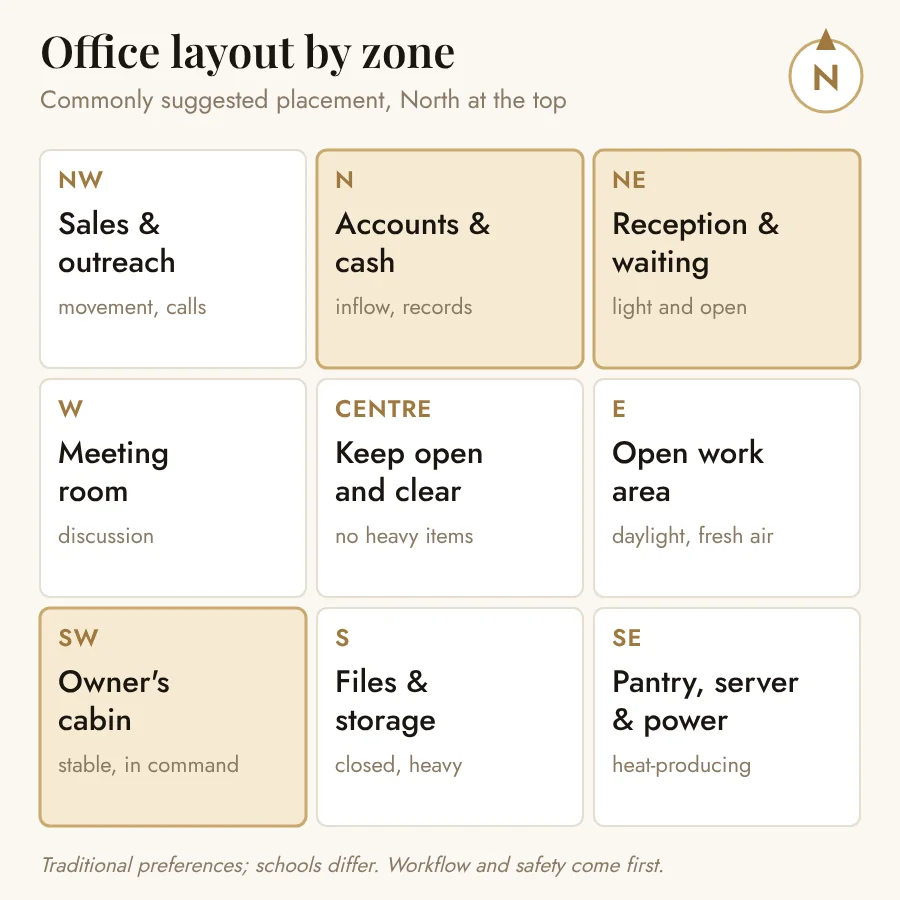
Read it as a starting point, not a rule. A real office has columns, a lift core and windows in the wrong place. The skill is moving the right functions into the right zones without breaking how your team works.
Where the owner or MD should sit
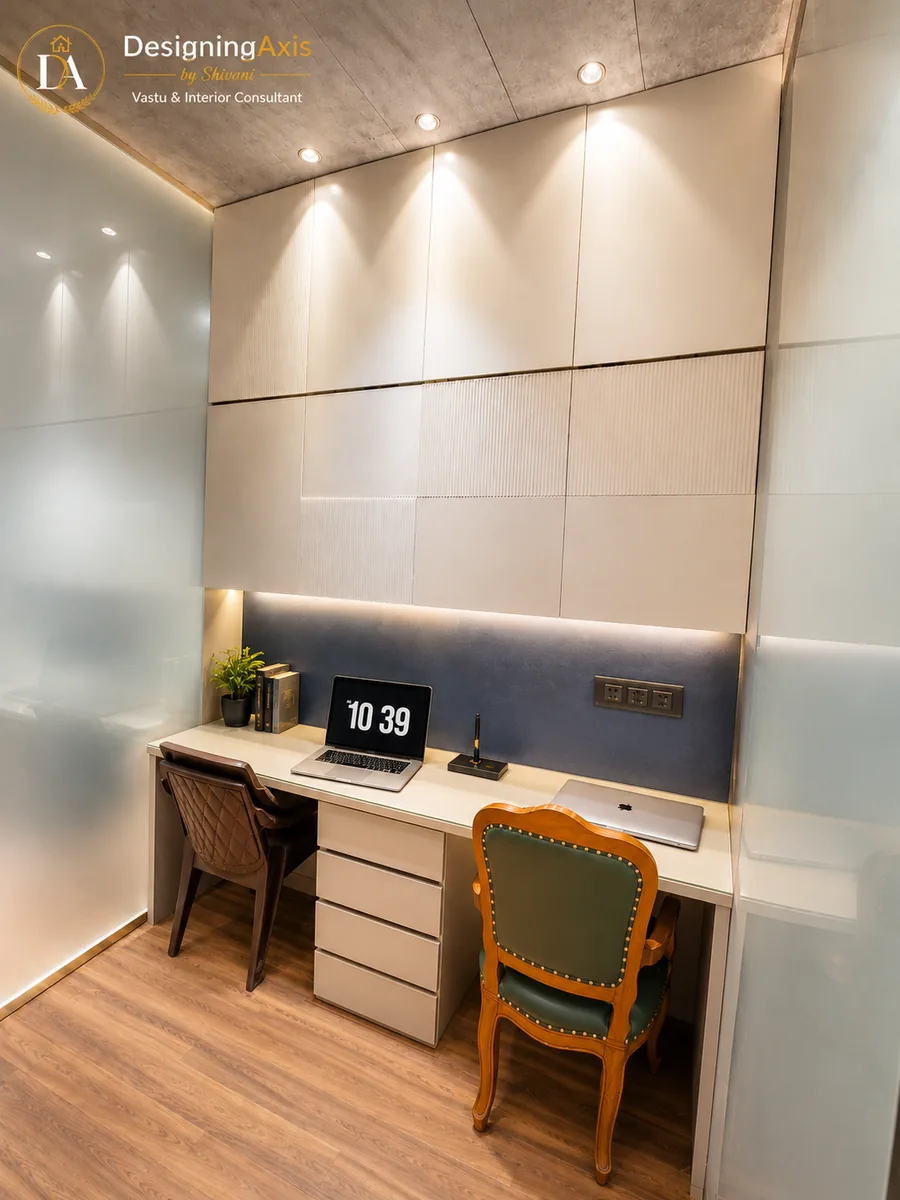
This is the decision most clients ask about first. The commonly suggested seat is the south-west part of the office, with your back to a solid wall and your face to the north or east. The idea is stability behind you and an open view in front.
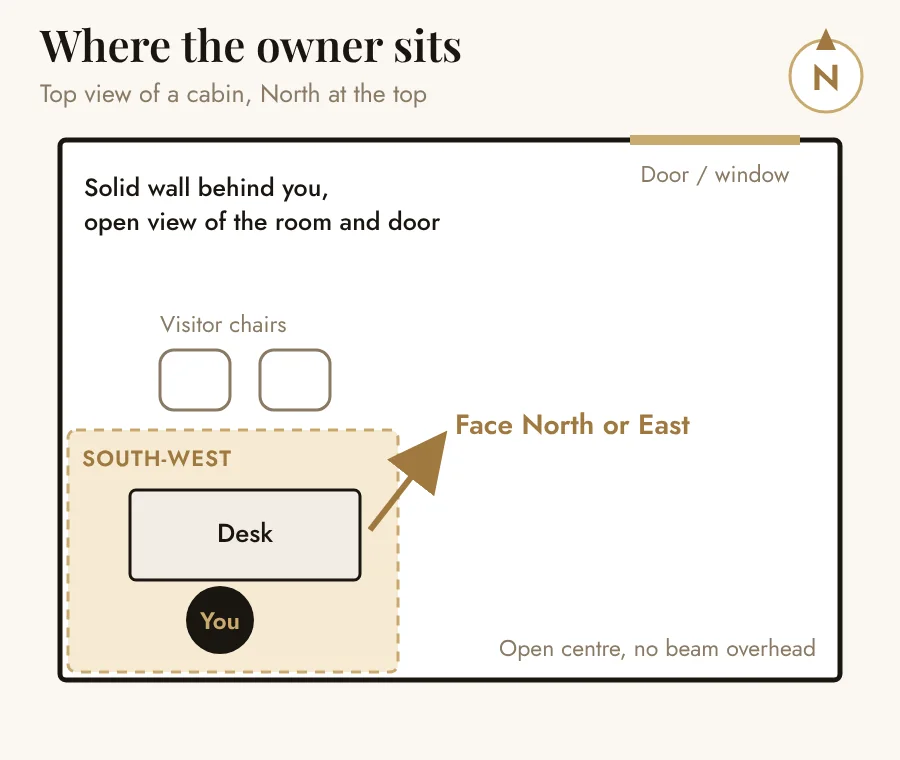
- Solid wall behind you, not a window or a glass partition
- You can see the door without turning around
- No exposed beam directly over the chair
- Desk is square and uncluttered, with space in front
- Visitor chairs sit opposite you, not beside you
Entrance, reception and waiting area
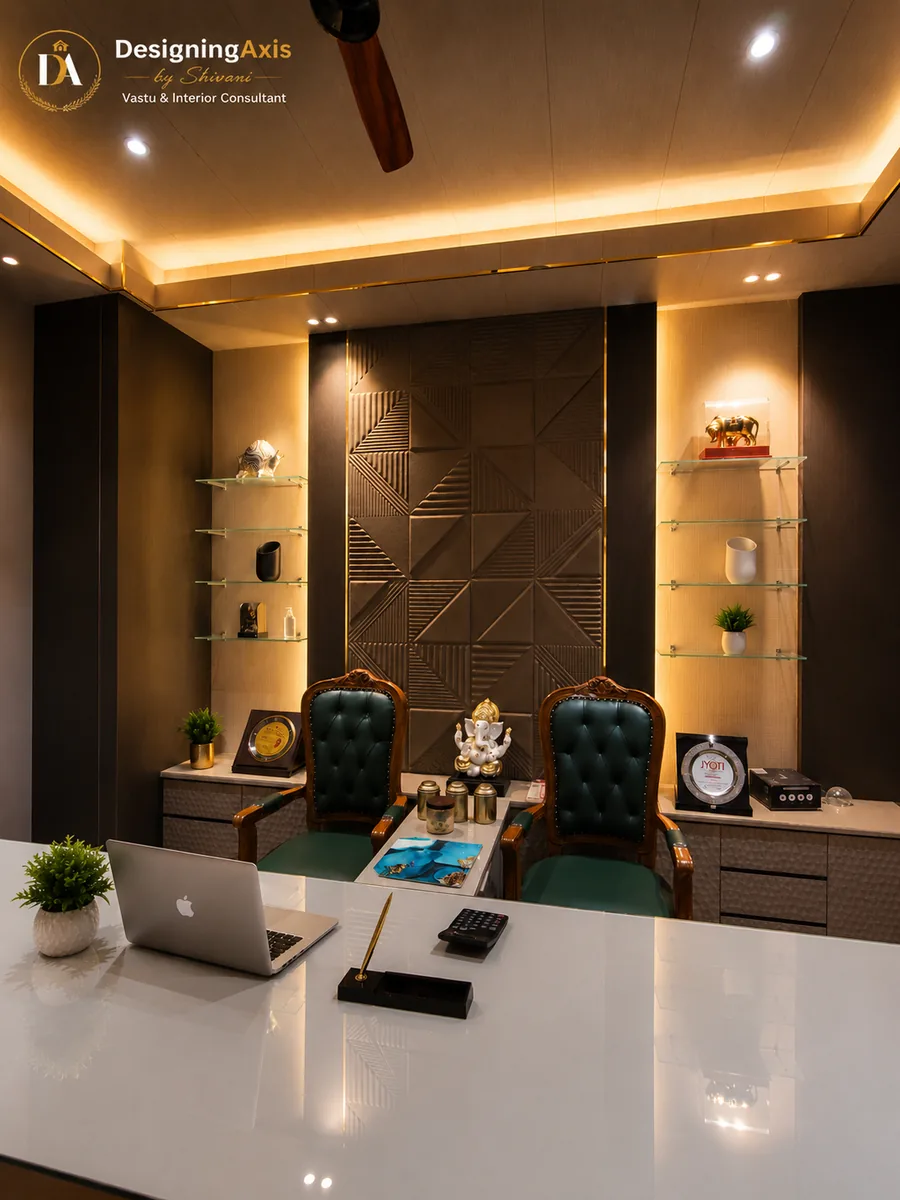
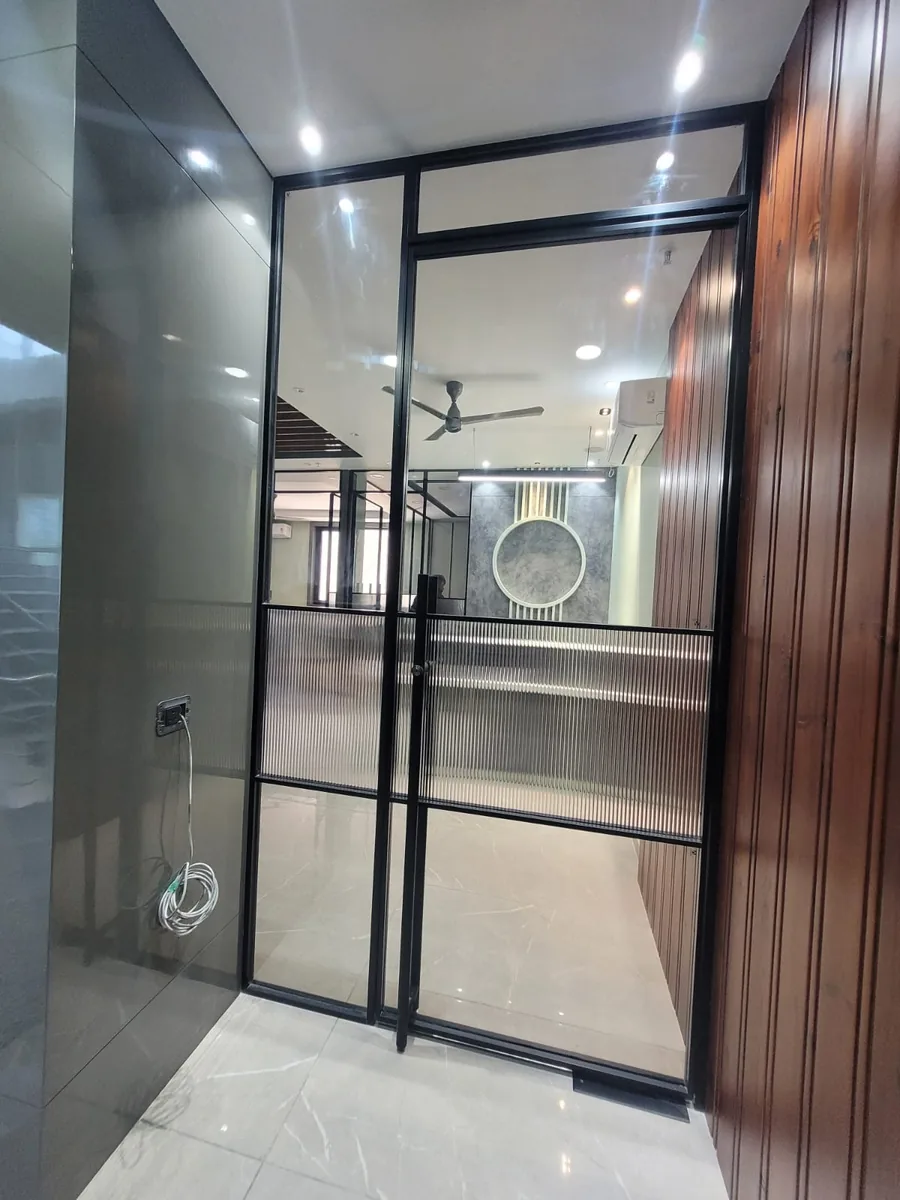
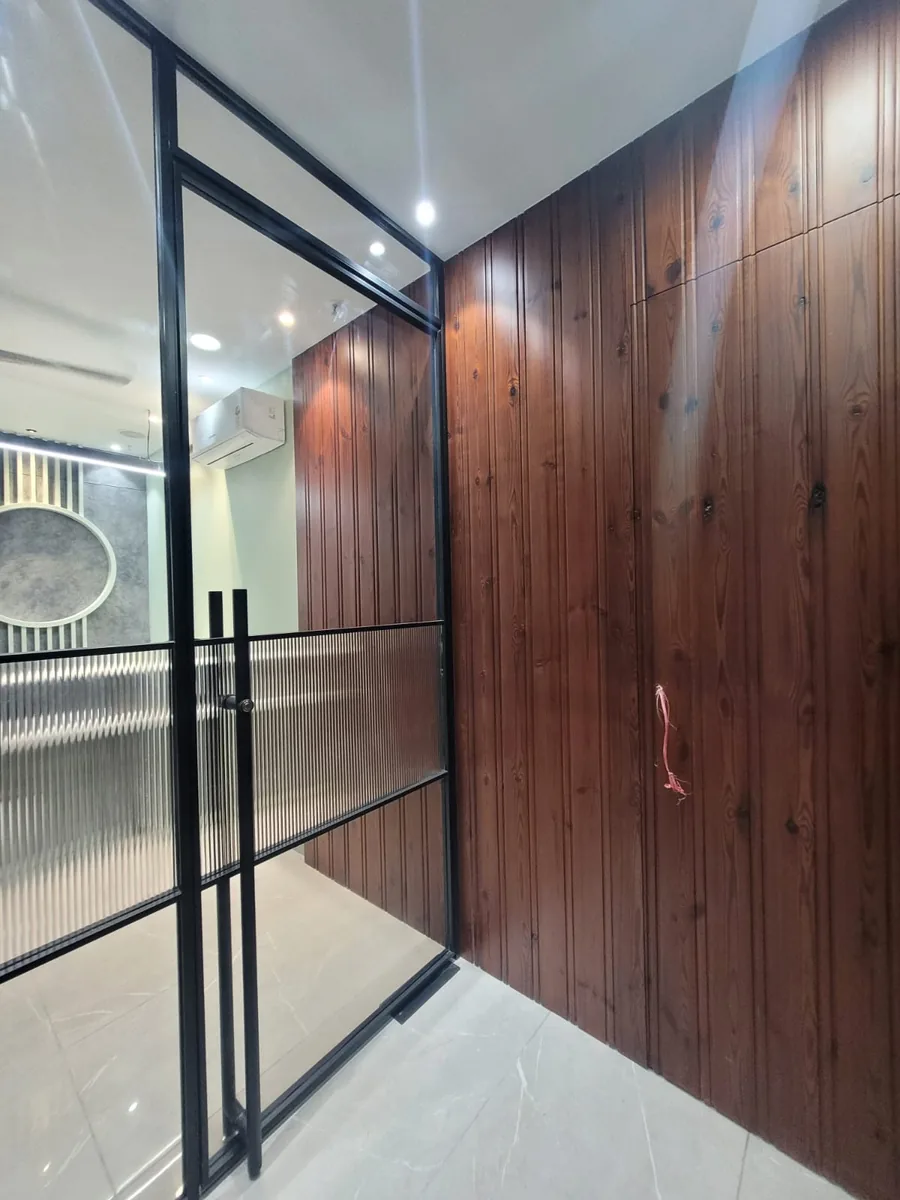
A bright, clear entrance is good Vastu and good business. The commonly suggested entrances are north, north-east and east. A south-west entrance is the hardest to work with, and in that case the fix is usually inside: a reception that holds the space, good light, and no clutter near the door.
Keep the door area bright. No shoe racks, dustbins or stacked cartons. Make the nameplate easy to read.
North-east or east is commonly suggested. Keep it light and open, with a clear route to the cabins.
Visitors should wait where they can see the reception, not where they face a blank wall or a toilet door.
Accounts, cash and records
The north is traditionally linked with money flow, so accounts, billing and the cash box are commonly placed in the north or north-east. The person working there faces north or east. If you cannot move the desk, keep the cash closed, tidy and near the north side of the room.
Pantry, server and power
Fire element items such as the pantry, server cabinet, UPS and electrical panel are commonly kept in the south-east. This is also sensible planning: heat, wiring and water are better grouped and ventilated. Avoid putting the pantry in the north-east.
Meeting rooms, files and storage
Meeting rooms often sit in the west or north-west, where conversation and movement suit the zone. Heavy storage and files go to the south or west in closed cabinets. Keep storage out of the north-east and away from the centre.
Keep the centre open
The centre of the office, the Brahmasthan, is traditionally kept open. Do not park heavy cabinets, a storage cage or a printer island there. It also keeps the floor easy to walk and the exits easy to reach.
When Vastu and the room disagree
Almost every office has a conflict. The staircase is in the north-east. The only free corner is the south-east. The lift core sits in the south-west. Use this order when preferences clash.
- Safety and exits. Clear escape routes and fire equipment come first.
- Workflow. People who work together sit together.
- Owner's seat. Get the south-west and a solid back wall if the plan allows.
- Centre and entrance. Keep both open and bright.
- Everything else. Colour, plants, small objects and minor placements.
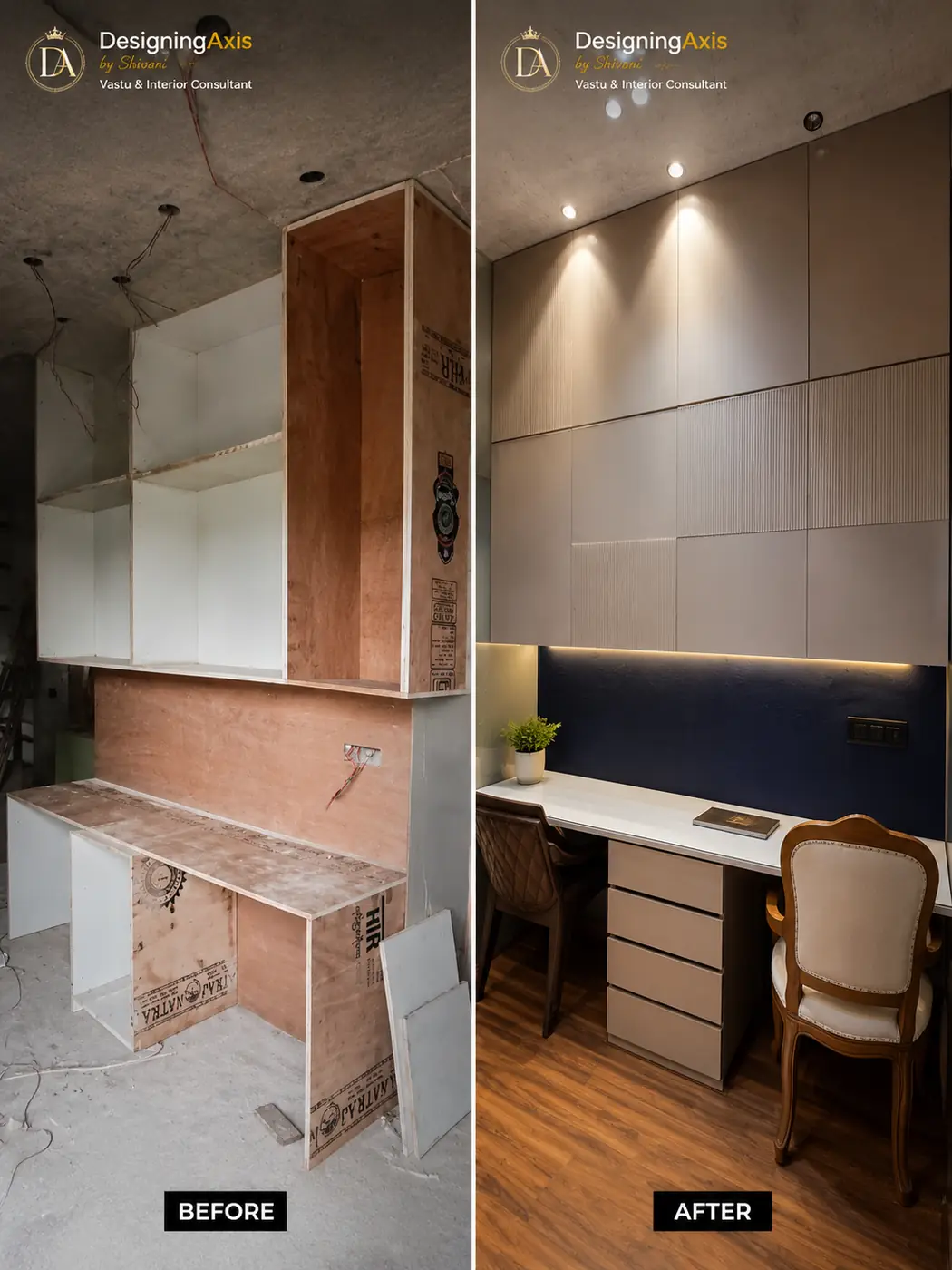
Clients often arrive thinking they must rebuild. Most of the time we move four or five things: the owner's chair, the cash desk, the cabinet and the pantry. That is a half-day job, not a renovation.
— Shivani Mathur, Interior Designer & Vastu ConsultantFixes that do not need demolition
- Turn the desk so you face north or east, then check the wall behind you
- Move closed storage to the south or west
- Clear the north-east of boxes, bins and old files
- Use colour: light and fresh in the north-east, earthy and warm in the south-west
- Add a plant or water element in the north or north-east if the room allows
- Shift the printer and server to the south-east
Office Vastu checklist
Seating
- Owner sits south-west, facing north or east
- Solid wall behind the owner
- Door visible from the seat
- No beam overhead
Zones
- Accounts and cash north or north-east
- Reception north-east or east
- Pantry, server and power south-east
- Heavy storage south or west, closed
- Centre open and clear
Check before you finish
- Exits and fire equipment are clear
- Staff workflow still works
- Entrance is bright and uncluttered
- Nothing heavy in the north-east
Frequently Asked Questions
Which direction should the owner face in an office?
Most Vastu practitioners suggest the owner sits in the south-west part of the office and faces north or east. Where the room does not allow that, a west or south seat with a solid wall behind is the usual second choice. A clear view of the door matters as much as the compass direction.
Where should the cash counter or accounts desk be in an office?
The north or north-east is the commonly suggested zone for cash, accounts and records, with the person sitting there facing north or east. If that corner is a staircase, toilet or pantry, keep the cash box closed and place it as near to the north as the plan allows.
Can Vastu be applied to a rented office?
Yes, in a reversible way. Seating direction, desk position, storage, colour, plants and the position of the pantry or server cabinet can usually be adjusted without touching walls. Structural moves are not needed to get most of the benefit.
Does the main entrance direction matter for an office?
Many schools prefer a north, north-east or east entrance. A south-west entrance is considered the hardest to work with. Entrance direction is only one input: keep it bright, uncluttered and easy to find, and fix what you can inside.
What should go in the centre of an office?
Keep the centre open and light. Avoid heavy cabinets, pillars wrapped in clutter or a storage cage there. A clear centre also helps movement and fire safety, so the Vastu and practical advice agree.
Is Vastu more important than workflow and safety?
No. Fire exits, accessibility, ergonomics and how your team actually works come first. Vastu preferences are traditional guidance that you fit around those needs, not a reason to compromise them.
Can you review my office layout online?
Yes. Send the floor plan with the north direction marked and a few photos on WhatsApp. For an on-site review we cover Ghaziabad, Noida, Delhi and the wider NCR.
Want Your Office Layout Reviewed?
Send your floor plan with north marked. Shivani Mathur reviews the layout for Vastu and interior planning, on site across Delhi NCR or online anywhere in India.