Materials & Finishes Guide
for Indian Homes
Laminates, veneer, stone, Korean panels, modular kitchen materials — choosing the right material for every space. By Shivani Mathur for Ghaziabad & Delhi NCR homes.
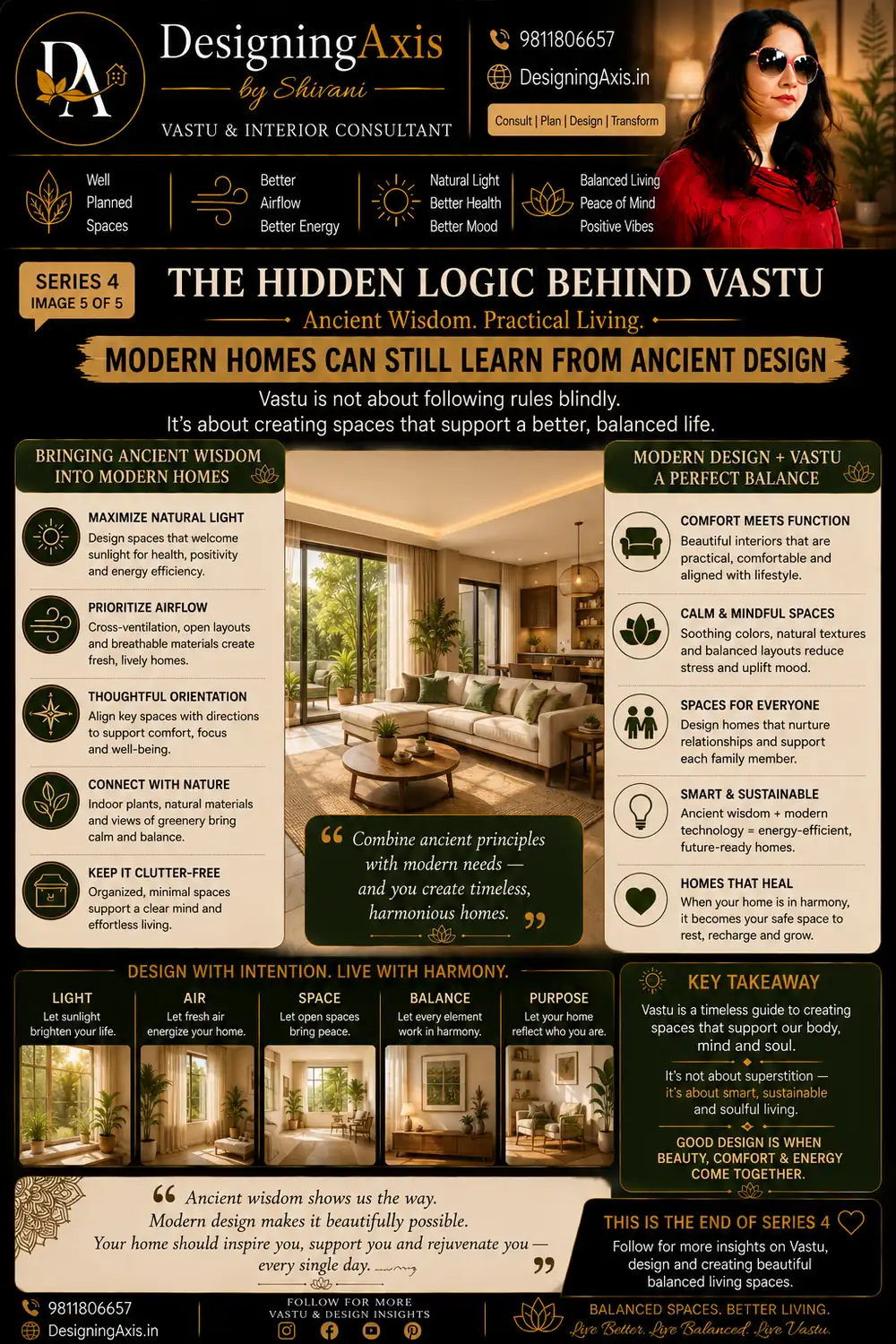
Material choices determine how a home looks on day one and how it holds up over the next 10-15 years. A beautiful design executed in wrong or low-quality materials will look dated and damaged within 2-3 years. This guide explains what each material is, where it works well, where it doesn't, and what it costs — so you can make informed decisions rather than relying on whatever a vendor happens to have in stock.
Why Materials Matter More Than Most Homeowners Think
The most common regret after an interior project is not the design — it's a material choice. Kitchen shutters that delaminate in two years, wall paint that peels in the bathroom, flooring that chips at the edges, wardrobe handles that corrode. Every one of these is a material decision made quickly under time pressure, without adequate information.
Wood & Laminates
Plywood — The Substrate That Everything Depends On
Plywood is the structural base of modular kitchens, wardrobes, TV units and most carpentry. The quality of the plywood is more important than the quality of the shutter on top of it. Using low-quality plywood to save cost and then spending on premium shutters is a false economy — the structure will fail before the surface does.
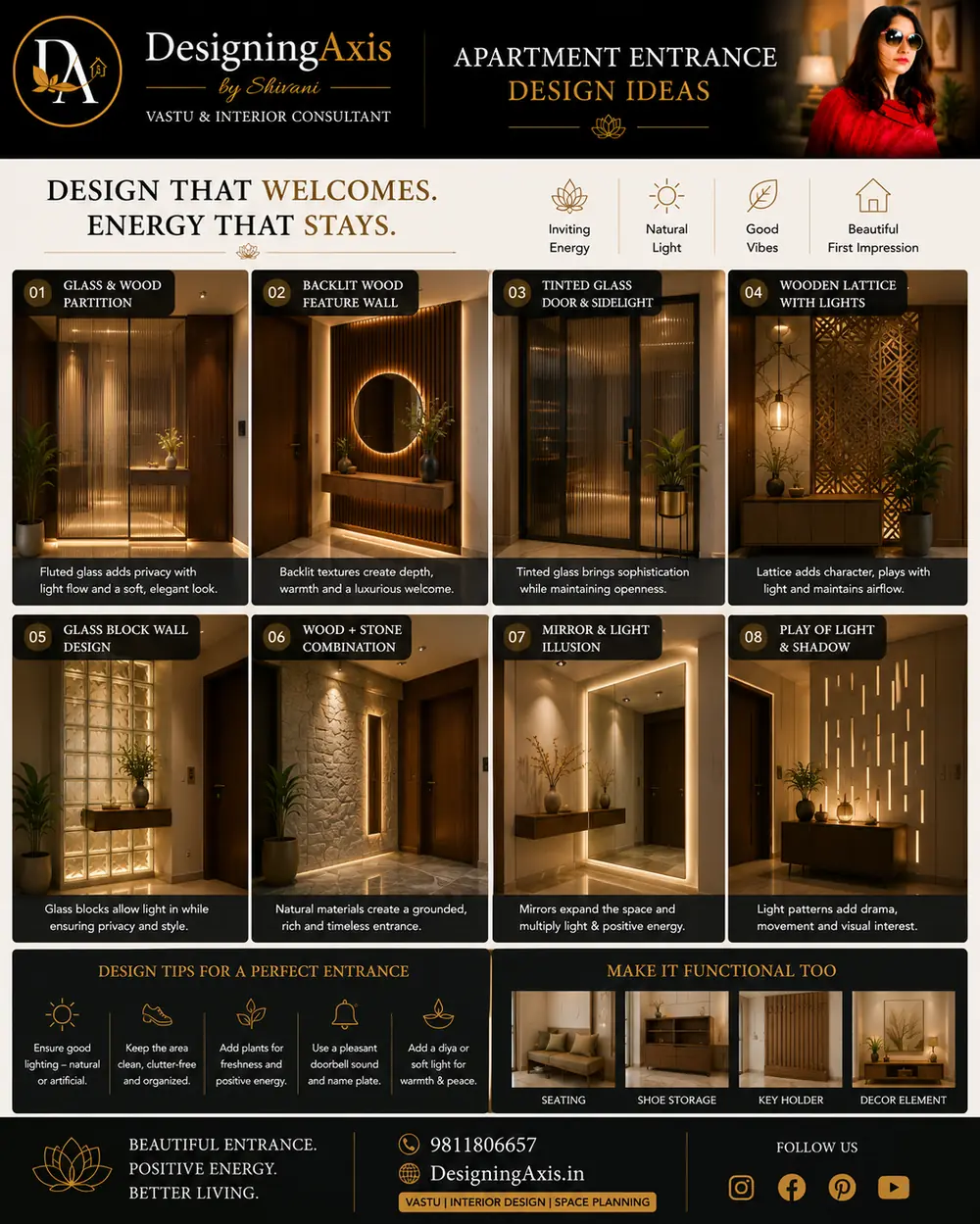
Types: Commercial Ply (ISI, ₹55-75/sq ft, 8-12 years) for dry areas. Marine Ply / BWP (₹90-130/sq ft, 15-20 years) for kitchen and bathroom carcasses. Never use MDF for structural kitchen or bathroom applications — it swells irreversibly with moisture.
Laminates
Laminates are the most common shutter material in Indian modular furniture. Look for: minimum 1mm thickness, scratch-resistance rating above 3N, and surface texture that suits the aesthetic (matte laminates hide fingerprints better than glossy).
Veneer — Real Wood for a Premium Feel
Veneer is a thin slice (0.5-1mm) of actual wood applied over a plywood substrate. The warmth and grain variation veneer brings is something no laminate can fully replicate. Suitable for master bedroom wardrobes, TV walls, study shelving. Requires oil treatment every 1-2 years. Not recommended for kitchens or bathrooms.
Stone & Surface Materials
Kitchen Countertops
For most Ghaziabad households, quartz is the right counter choice — non-porous (doesn't stain from spills), extremely hard-wearing, consistent in appearance, available in white, grey and beige tones. Granite is hard and heat-resistant but has a heavier aesthetic. Italian marble looks spectacular but requires repolishing every 2-3 years and stains with acidic liquids.
Wall Cladding
Real marble cladding looks spectacular but requires maintenance. Stone-look porcelain tiles (available in 800×1600mm slabs) give a near-identical visual result at a fraction of the cost, with no maintenance concerns — the practical choice for NCR homes.
Korean Panels
Korean fluted panels (WPC/PVC fluted wall cladding) install in hours with no curing time, are 100% waterproof, come in dozens of textures and tones, and give an immediate premium look. Best applications: TV wall, pooja room surround, bedroom headboard wall, kitchen backsplash accent, bathroom feature wall. Cost: ₹180-350/sq ft. Not recommended as a full-room treatment — powerful on one or two walls, heavy if overused.
Flooring Options for Indian Conditions
Indian homes face specific flooring challenges: wide temperature range, high dust and traffic, wet cleaning regime, and bare feet year-round.
- Vitrified Tiles (large format) — best for living, dining and kitchen. Very easy maintenance. ₹80-250/sq ft.
- SPC Flooring — best for bedrooms. Warmer underfoot, water-resistant. ₹130-220/sq ft.
- Wooden Laminate — bedrooms and study. Avoid mopping; never in kitchens, bathrooms or balconies.
- Italian Marble — premium living areas. Regular polishing required.
Kitchen Shutter Materials
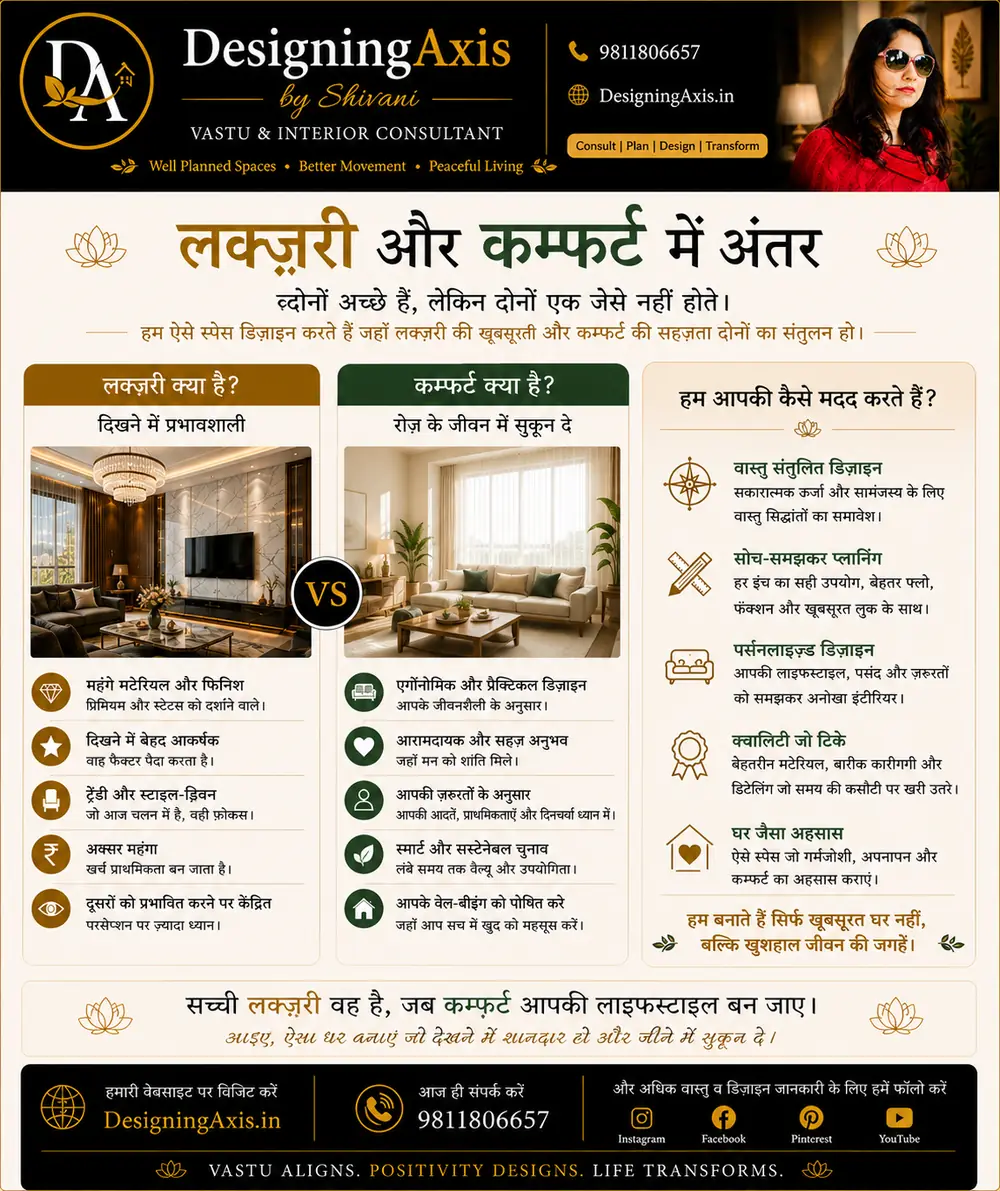
- Acrylic (₹950-1,400/sq ft) — high gloss, easy to clean, many colours, good durability. Best choice for most households.
- PU / Polyurethane (₹1,400-2,200/sq ft) — matte/satin/gloss options, better durability against everyday knocks. Worth the premium for heavy-use kitchens.
- Membrane/PVC (₹700-1,100/sq ft) — textured, no seams, no delamination. Good mid-range option.
- Glass Shutters (₹1,800-3,000/sq ft) — premium, light-reflecting, excellent durability.
Vastu & Materials
Vastu Shastra has specific guidance on materials that aligns well with modern design principles: natural materials (wood, stone, clay, brass) are preferred as they carry natural energy and are considered grounding. Brass and copper are specifically valued — also genuinely antimicrobial and age beautifully. Avoid plastic decor and synthetic materials in or near the pooja zone. Heavy materials (stone, solid wood) belong in South and West zones; lighter materials (glass, light wood) suit North and East.
Frequently Asked Questions
What is the best material for a modular kitchen in India?
Marine-grade plywood carcass with acrylic or PU shutter. Marine ply resists moisture and heat far better than MDF. Acrylic shutters are easy to clean, durable and available in hundreds of colours.
What is the difference between laminate and veneer?
Laminate is a synthetic surface (printed pattern). Veneer is actual thin wood applied over substrate. Laminate is more consistent and lower cost. Veneer has the warmth of real wood and looks more premium but requires more care.
What are Korean panels used for in interior design?
WPC/PVC fluted panels used as feature wall cladding — TV walls, pooja room surrounds, kitchen backs, bathroom accent walls. 100% waterproof, installs quickly, looks premium. Best on 1-2 walls as a feature, not throughout.
Which flooring is best for a Ghaziabad flat?
Large-format matte vitrified tiles (800×800mm or larger) for common areas. SPC flooring for bedrooms — warmer underfoot, water-resistant, easy to replace.
How do I choose between PU and acrylic for kitchen shutters?
Acrylic (₹950-1,400/sq ft) is right for most households — glossy, cleanable, durable. PU (₹1,400-2,200/sq ft) offers matte/satin options and better durability. Worth the premium for heavy-use kitchens.