How to Choose
the Right Interior Designer
10 questions to ask before hiring — what separates great designers from average ones. A practical guide for Ghaziabad & Delhi NCR homeowners by Shivani Mathur.
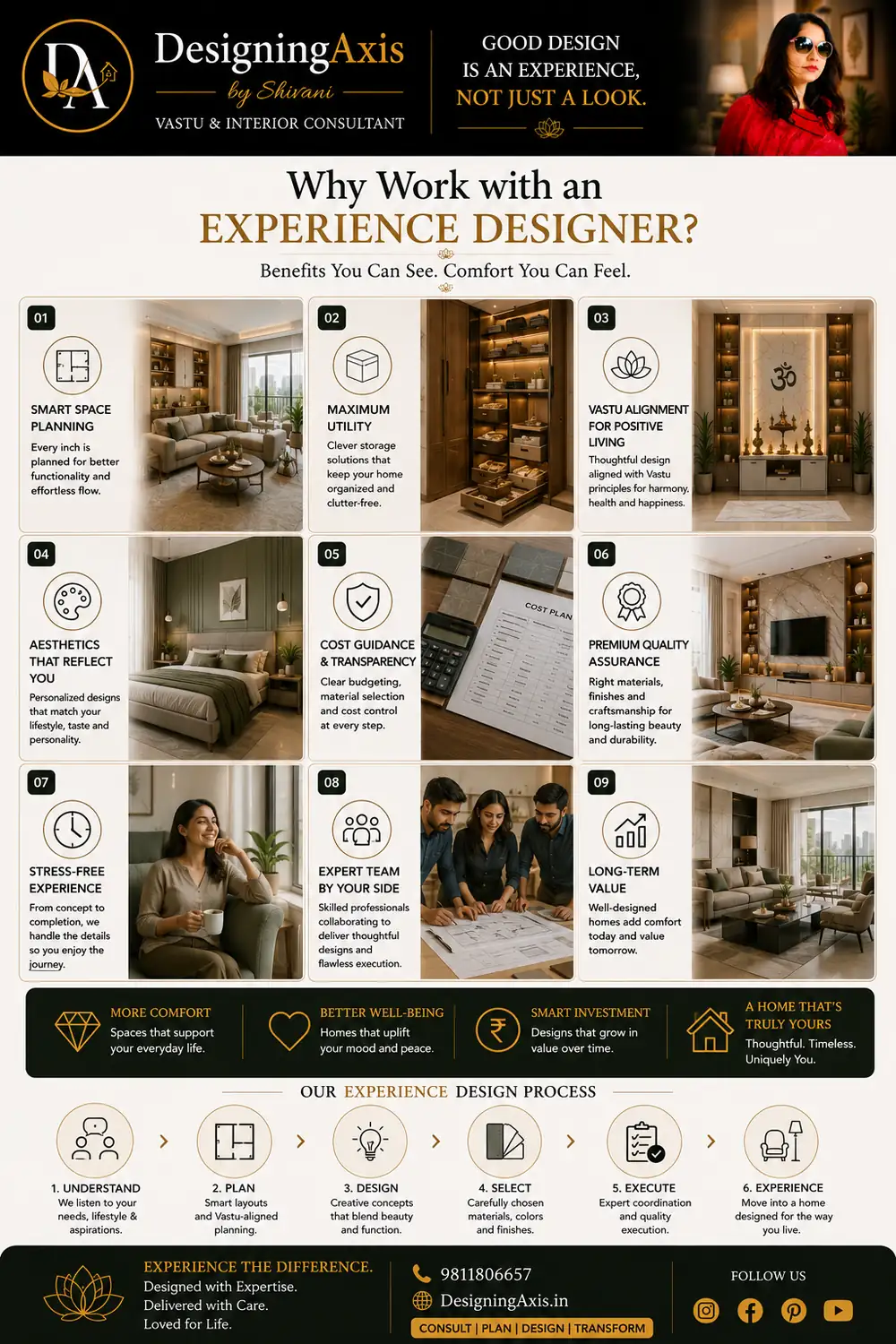
Choosing an interior designer is one of the most important decisions in a home project — and one most people make without a clear framework. The right designer saves you money, time and stress. The wrong one costs significantly more than their fee in rework, delays and substandard outcomes.
Why the Choice of Designer Matters More Than the Budget
Two homeowners with identical ₹12L budgets for the same 2BHK can end up with dramatically different outcomes, depending entirely on who designs and executes the project. The designer determines: how well the space is planned, which vendors are used and at what quality, how decisions are managed during execution, and whether Vastu principles are aligned throughout. The most expensive mistakes in interior projects almost always trace back to a designer choice, not a budget shortfall.
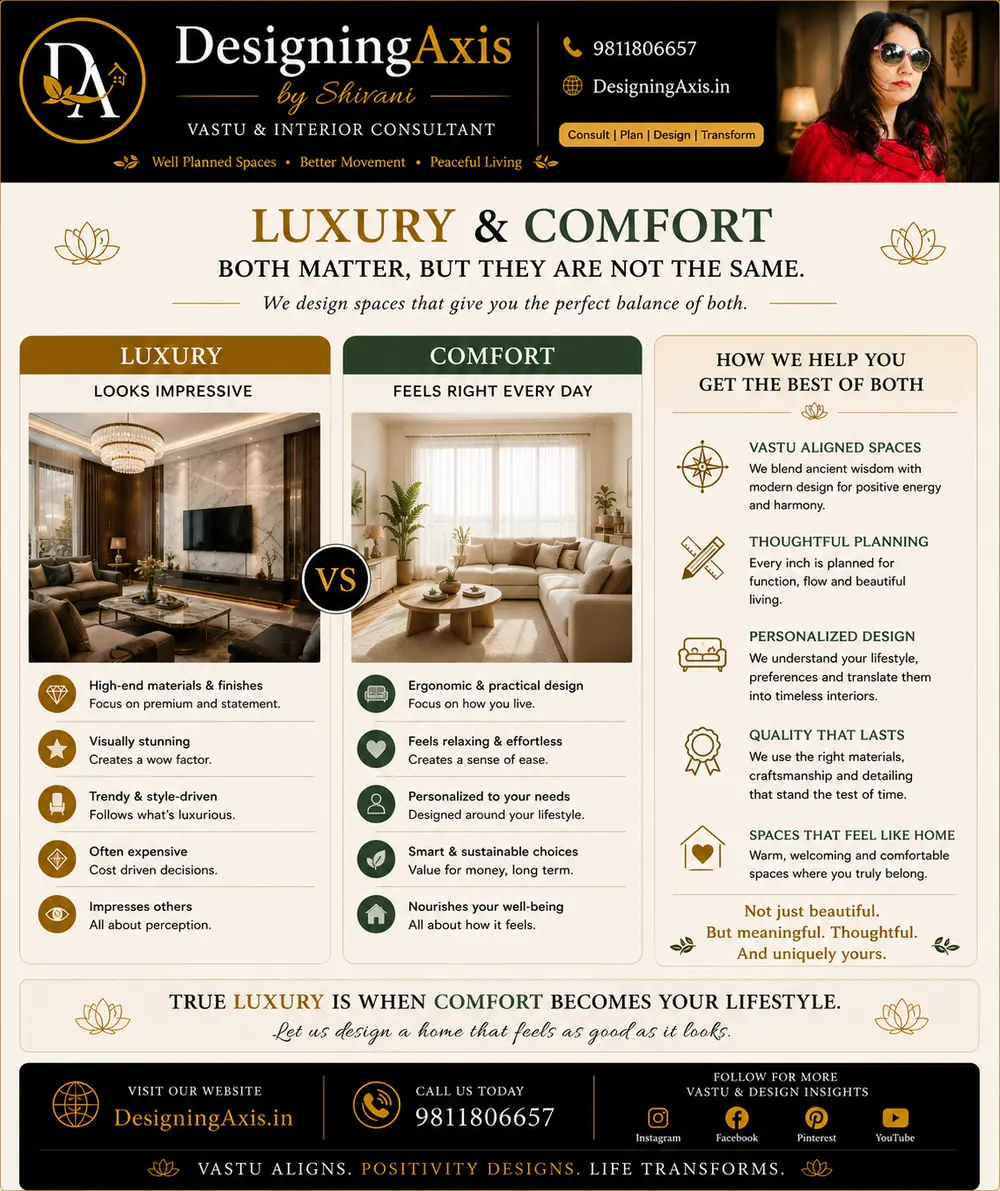
The 10 Questions to Ask Any Interior Designer
1. "Can you show me 5-10 completed projects similar to mine?"
Portfolio breadth tells you range; portfolio depth tells you expertise. A designer who has completed 50 2BHK projects in Ghaziabad will do yours better than one who has done 5 high-end bungalows. Look for consistency of quality across projects — not just their best one.
2. "Will you give me a fixed, itemised quote before work begins?"
This is the most important practical question. An itemised quote (line-by-line cost for every element) protects you from scope creep and surprise additions. A "rough estimate we'll finalise as we go" is a red flag.
3. "Do you handle site supervision, or do I coordinate vendors myself?"
The design fee and execution are very different services. Many designers provide drawings and leave you to manage contractors — which is a full-time job for 6-8 weeks. Clarify exactly what's included before comparing fees.
4. "What is your margin on materials?"
A transparent designer tells you their material margin upfront (typically 15-20%). Hidden markups on materials are common and can significantly inflate the real cost of a project.
5. "How do you handle Vastu?"
There are three answers: "I don't do Vastu", "I can refer you to someone", or "I integrate it into the design." For Indian homes, the third answer produces the best outcome.
6. "What is your payment structure?"
Typical for reputable designers: 30% on signing, 30% at design approval, 30% at midpoint, 10% at handover. Never pay more than 40% upfront.
7. "Can you share references from 2-3 recent clients I can speak with?"
A confident, reputable designer will provide references without hesitation. Ask specifically: Was the final cost close to the quoted cost? Was the timeline accurate? Would you hire them again?
8. "What happens if something isn't right after handover?"
Post-completion support matters. A designer who offers a defined defect liability period (typically 6 months to 1 year) stands behind their work.
9. "Who will actually be at my site — you, or a supervisor?"
Ask how often the senior designer will personally visit your site and at which critical stages.
10. "What do you think of my budget for what I want?"
An honest designer tells you if your budget and expectations are misaligned — before they take your project.
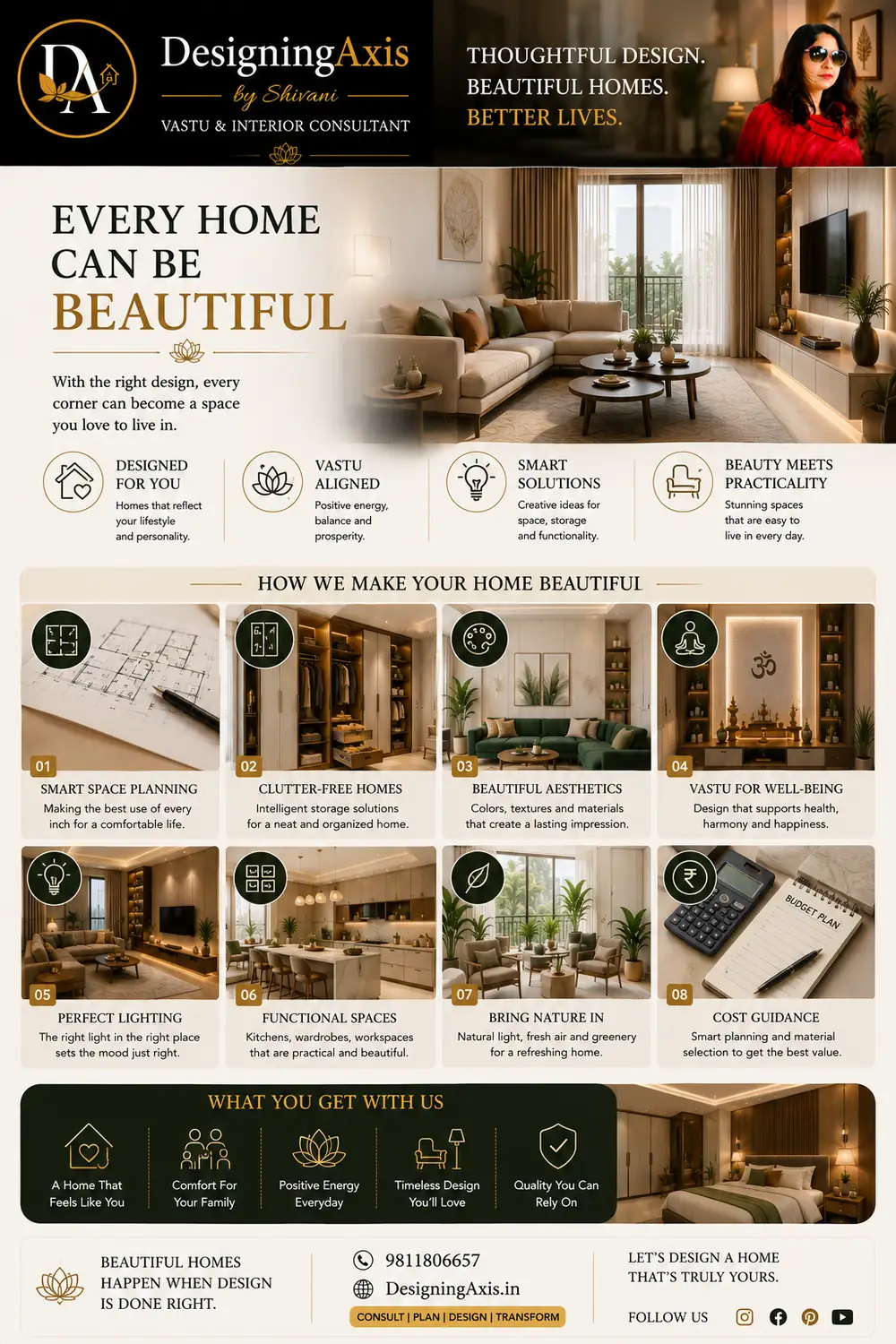
5 Red Flags to Watch For
- Only an overall estimate, never itemised. "It'll be around ₹10-12L" with nothing in writing is not a quote.
- No completed project photos or references. Renders and mood boards are not evidence of completed work.
- More than 40% upfront. Large upfront payments reduce your leverage if quality issues arise.
- Unrealistic timelines. A complete 2BHK in 15 days is not possible.
- Pressure to decide quickly. "This offer is only valid until Friday" is a sales tactic, not a sign of a designer in high demand.
Understanding Interior Designer Fee Models
- Per sq ft rate (₹50-350/sq ft) — ranges from drawings-only (₹50-80) to full-service with premium materials (₹250-350).
- Percentage of project cost (10-15%) — aligns the designer's interest with quality outcomes.
- Fixed fee — agreed scope, agreed price. Only works well when scope is completely defined upfront.
Why Vastu + Design Together Produces Better Outcomes
When Vastu and interior design are done by the same person at the same time, the plan is coherent from the start. Main door direction informs entrance colour and threshold design. Kitchen zone informs cooking direction and light source placement. Master bedroom orientation informs bed placement and wardrobe wall. The result is a home that is both aesthetically designed and energetically aligned.
The Local Advantage — Why Ghaziabad Matters
A designer based in and specialising in Ghaziabad brings specific knowledge a national online platform cannot: the specific builder layouts of societies in Raj Nagar, Kavi Nagar, Indirapuram and Siddharth Vihar; trusted local vendors; current material costs; and the ability to do regular site visits. For any project in Ghaziabad, an interior designer in Ghaziabad with verifiable local project history is the right starting point.
Frequently Asked Questions
What is the most important question to ask an interior designer?
Ask to see 5-10 completed projects similar to yours with references you can contact. Portfolio consistency and client references are the most reliable indicators of what you will actually get.
What is the difference between a cheap and an expensive interior designer?
At the lower end you typically get drawings only — you manage vendors yourself. At the higher end you get design, procurement, site supervision and quality assurance.
How do I know if an interior designer is honest about costs?
An honest designer provides an itemised quote before work begins, discloses their material margin, and does not revise costs upward mid-project without a genuine change in scope.
What are the biggest red flags when hiring an interior designer?
No itemised quote, no completed project references, more than 40% upfront, unrealistic timelines, and pressure to decide quickly.
Should I hire an interior designer who also does Vastu?
For Indian homes, yes — ideally. Integrated Vastu and design produces one coherent plan rather than retrofitting Vastu remedies into an already-designed space.