Living Room Design —
Complete Planning Guide
Everything you need to plan, design and furnish the perfect living room — layout strategies, furniture selection, colour palettes, lighting design, Vastu alignment and realistic budgeting by Shivani Mathur.
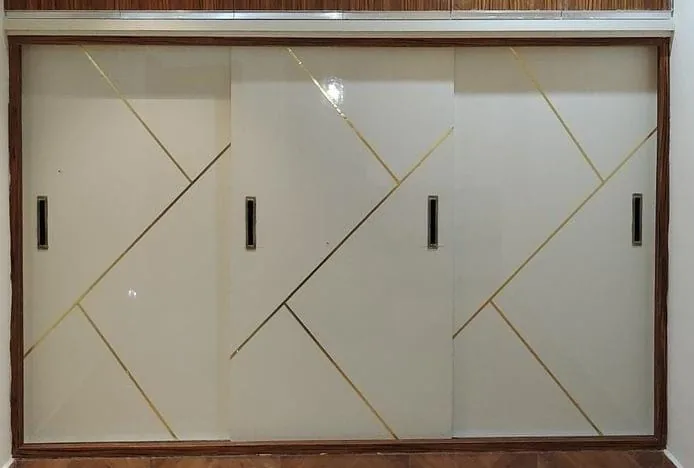
A beautifully designed living room is the heart of every home — by DesigningAxis by Shivani.
The living room is the most public and most used space in any Indian home. It is where families gather, guests are received, conversations happen, and life is shared. Getting the living room right — in terms of layout, furniture, light, colour, and energy — has more impact on daily quality of life than almost any other design decision in the home.
This comprehensive guide walks you through every aspect of living room design, from the first layout sketch to the final decorative details — with Shivani Mathur's 20 years of residential design experience distilled into practical, actionable guidance for Indian homes.
"The living room is where a home expresses itself to the world. Before we select a single piece of furniture, we must understand three things: how the family uses this space, how the light moves through it during the day, and what energy the Vastu zone it occupies carries. Everything follows from these three questions."
— Shivani Mathur, Lead Interior Designer · 20 Years ExperienceLayout Planning — The Foundation of Every Great Living Room
The layout determines everything else. A beautiful sofa in the wrong position, a stunning rug under the wrong furniture arrangement — all of it becomes irrelevant if the layout does not work. Shivani Mathur begins every living room project with a layout study before any product selection happens.
Before anything — measure your living room with precise dimensions. Length, width, ceiling height, door and window positions, and any fixed elements (columns, beams). Design on paper before spending a rupee.
Every living room needs clear pathways — minimum 90cm between furniture pieces for comfortable movement, 120cm for primary circulation paths. Traffic flow determines furniture placement, not aesthetics.
Every great living room has one clear focal point — a feature wall, a fireplace, a large window, or a piece of art. Arrange all furniture in conversation with this focal point.
The TV should ideally be on the South or West wall. This means viewers face North or East while watching — both auspicious Vastu directions. Avoid placing TV on the North wall (viewers face South — problematic for health and focus).
Arrange seating so that people can converse comfortably — no seat more than 3 metres from the central point. U-shape, L-shape and facing configurations all work; scattered furniture that prevents conversation does not.
Never place the sofa directly in front of a window (creates glare and backlit faces during conversation). Seating should be perpendicular or at an angle to the main light source.
| Living Room Size | Recommended Layout | Sofa Configuration | Key Tip |
|---|---|---|---|
| Under 150 sq ft | Single focal point, minimal furniture | 2-seater or loveseat + 2 chairs | Use wall-mounted TV, floating shelves only |
| 150–200 sq ft | L-shape or U-shape seating zone | 3-seater + 1–2 chairs | One coffee table only, no side tables |
| 200–300 sq ft | Full conversation zone + study corner | 3-seater + 2-seater or 3+1+1 | Can introduce a secondary zone |
| 300–450 sq ft | Multiple zones — conversation + reading | Sectional or 3+2+1 set | Use rug to define zones |
| 450+ sq ft | Full zoning — conversation, reading, bar | Multiple seating clusters | Needs strong anchoring with focal points |
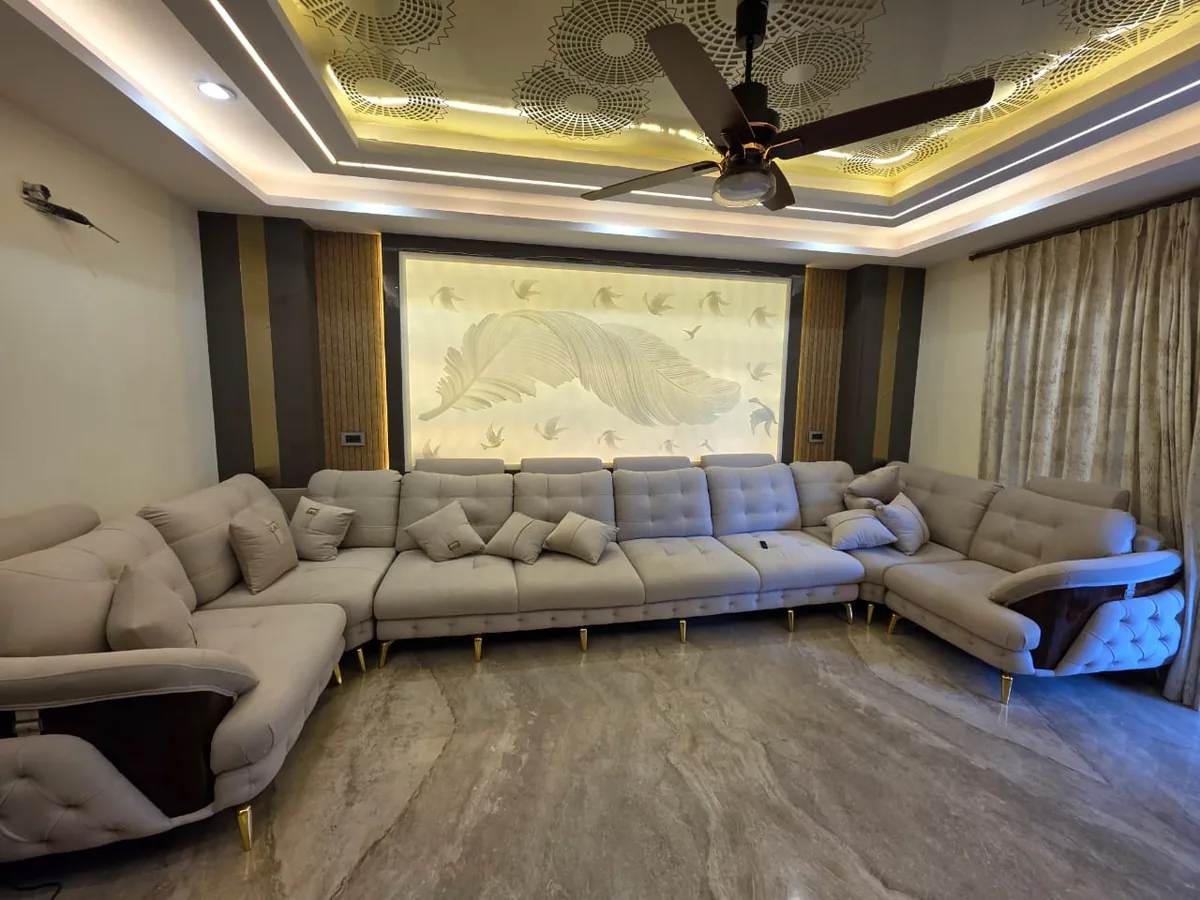
A well-planned living room layout creates clear conversation zones and natural traffic flow — by DesigningAxis by Shivani.
Furniture Selection — The Most Important Decisions
Living room furniture selection is where most people make the most expensive mistakes. The two most common errors: buying furniture that is too large for the room, and buying pieces that look beautiful individually but do not work together as a collection.
The Sofa — Your Most Important Purchase
The sofa is the centrepiece of every living room and likely the most expensive single item in the space. Getting it right is critical.
- Size rule: the sofa should be two-thirds the length of the wall it faces — never wider than the wall behind it
- Leg height matters: sofas with visible legs feel lighter and make rooms feel larger; sofas that sit on the floor feel heavier and anchor large rooms
- For Indian families: fabric sofas in high-traffic homes require tight weaves or performance fabrics (velvet wears better than linen)
- Depth matters for Indian usage patterns: deeper sofas (90cm+) are comfortable for lounging; shallower sofas (80cm) encourage upright posture
- Colour strategy: the sofa is a long-term investment — choose neutrals for the base, use cushions and throws for colour
- Test before buying: sit in it for at least 5 minutes. A sofa that looks beautiful but is uncomfortable will be abandoned.
| Sofa Type | Best For | Room Size Needed | Vastu Note |
|---|---|---|---|
| L-shaped Sectional | Families, large gatherings, TV viewing | 250 sq ft+ | Place the longer arm on South or West wall |
| 3-seater + 2-seater | Formal + casual zones, flexibility | 200 sq ft+ | Facing configuration ideal for conversation |
| 3-seater + 1+1 chairs | Traditional Indian setup, most versatile | 180 sq ft+ | Most common and practical configuration |
| 2-seater loveseat | Small apartments, studio living | Under 150 sq ft | Supplement with floor cushions for guests |
| Chaise sofa | Lounging focus, reading nook | 200 sq ft+ | Keep chaise on South side of room |
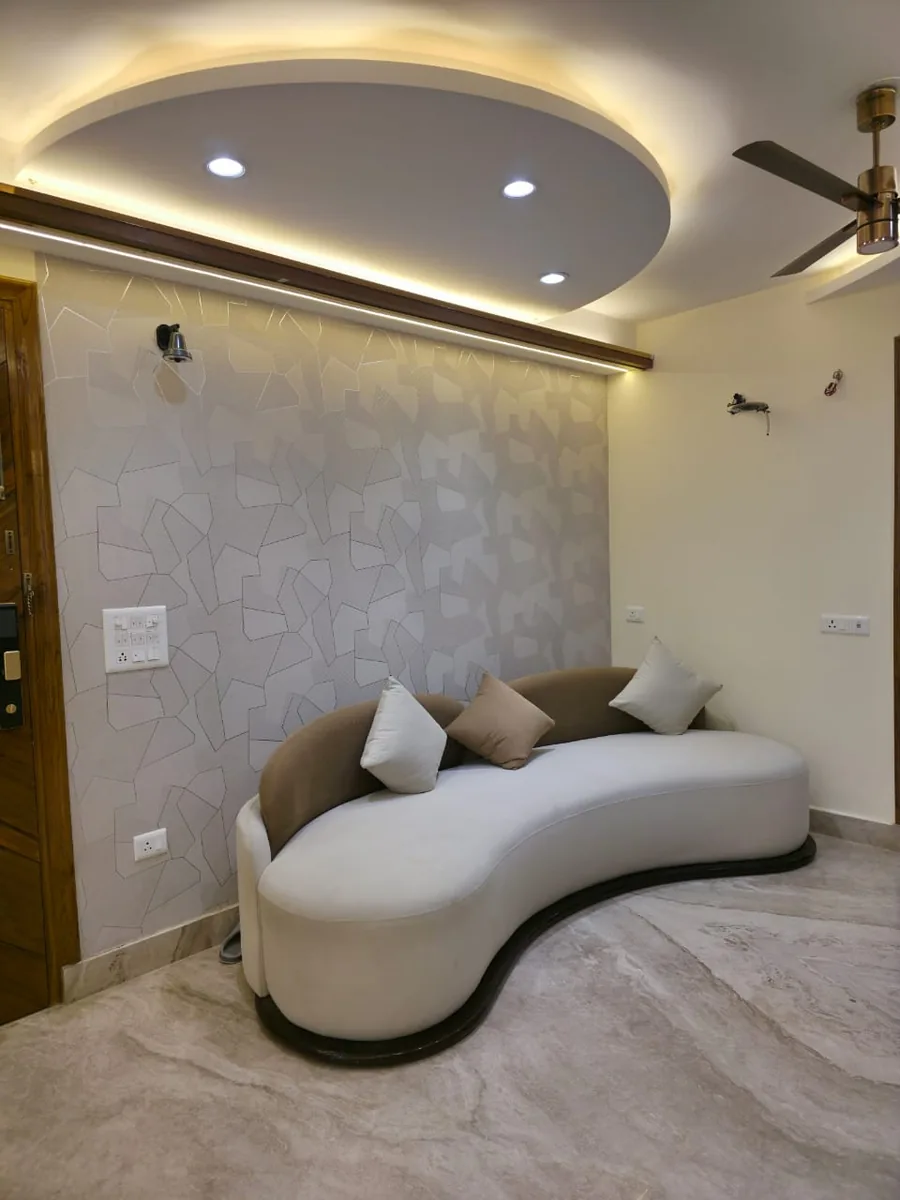
Sofa selection defines the character of the entire living room — this curved sectional by DesigningAxis creates a warm, inviting conversation zone.
Colour Palette — Creating the Right Mood
Colour is the most powerful — and most misused — tool in living room design. The right colour palette transforms a room; the wrong one makes it feel either sterile or chaotic.
The most versatile base for Indian living rooms. Warm white walls work with every style — from traditional to contemporary. Cream and off-white avoid the clinical coldness of pure white while reflecting maximum light.
Warm beige, camel, sand — these tones feel grounded and luxurious simultaneously. They work beautifully with the wood tones, brass accents, and terracotta textures typical of Indian interiors.
Gold is India's accent colour — in paint, fabric, or object form. A rich ochre or mustard yellow cushion, a brass lamp, a gold-framed mirror — these instantly elevate any neutral base.
Bottle green, forest green and sage are the defining accent tones of 2024–26 Indian interior design. A deep green feature wall or green velvet sofa reads as both traditional and contemporary.
For rooms with good natural light, deep indigo or navy blue as an accent creates a richness and depth that lighter tones cannot. Avoid in north-facing rooms with limited natural light.
India's most authentic accent colour — terracotta, rust and clay tones connect to our craft heritage while working perfectly with contemporary design. Particularly powerful in Ghaziabad and NCR homes.
"For Vastu, the colours that energise a living room are connected to its directional zone. A North-facing living room benefits from blue and green tones (Water element). An East-facing living room responds to warm yellows and light orange (Solar energy). Never use dark red as a primary colour in any living room — it overstimulates Mars energy."
— Shivani Mathur · Colour and Vastu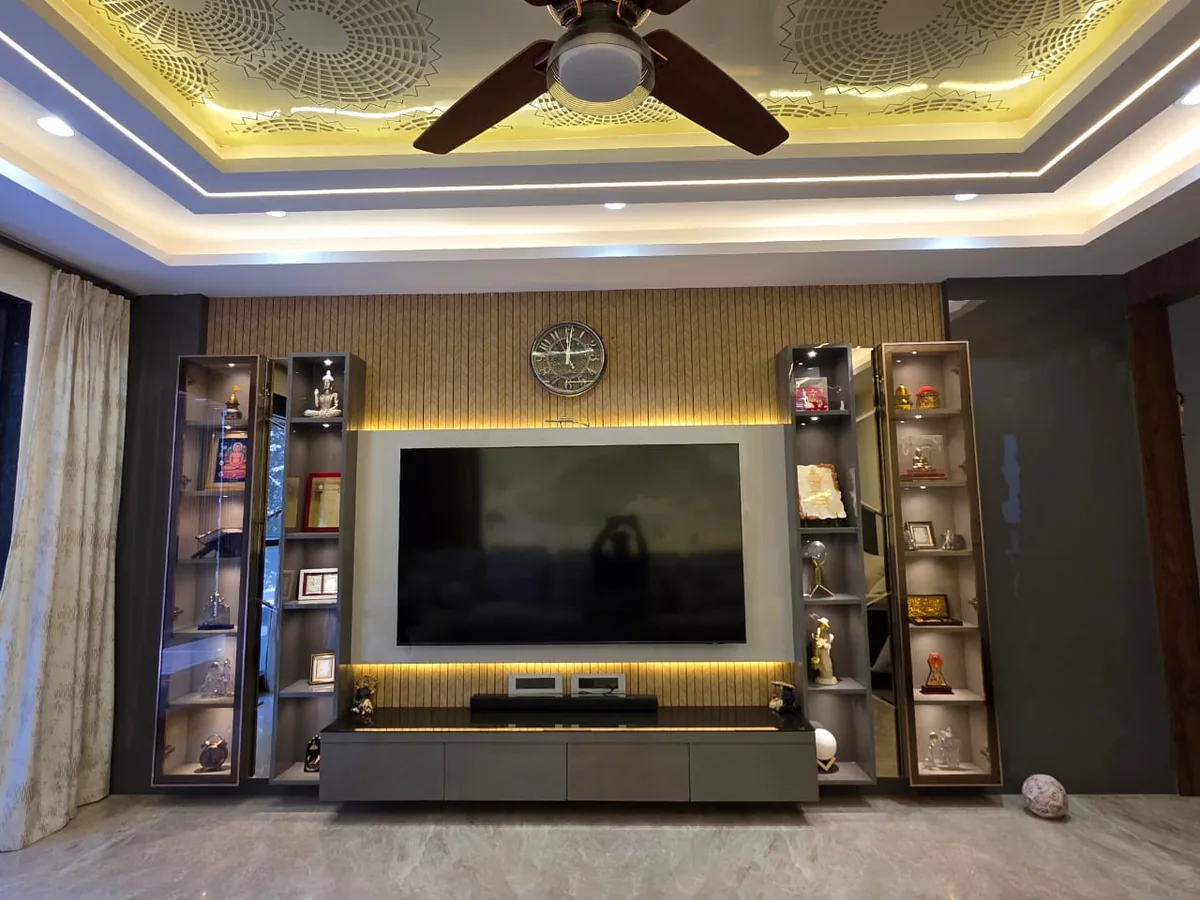
Warm neutrals with gold and earthy accents — the most versatile colour palette for Indian living rooms, by DesigningAxis by Shivani.
Lighting Design — The Most Overlooked Element
Lighting is the single most transformative element in any interior — and the most overlooked in Indian homes, where a single overhead LED light often illuminates an entire room. A well-lit living room uses three distinct layers of light.
| Lighting Layer | Purpose | Fixtures | Placement |
|---|---|---|---|
| Ambient (General) | Overall illumination of the space | Recessed downlights, false ceiling LEDs, chandelier | Central ceiling, evenly spaced |
| Task Lighting | Functional areas — reading, working | Floor lamp, table lamp, adjustable spots | Next to reading chair, at work area |
| Accent Lighting | Highlighting art, shelves, features | Picture lights, LED strips, spotlights | Behind TV, under shelves, on feature wall |
| Mood / Decorative | Atmosphere, warmth | Table lamps, fairy lights, candles | Side tables, console, mantel |
- Use warm white LEDs (2700–3000K) for living rooms — never cool white (5000K+) which feels clinical
- A dimmer switch on your main lights costs very little and transforms the room's versatility
- The TV area needs backlight — an LED strip behind the TV reduces eye strain dramatically
- Side table lamps at eye level (when seated) create warmth that ceiling lights alone cannot
- Layer at least three of the four lighting types in every living room
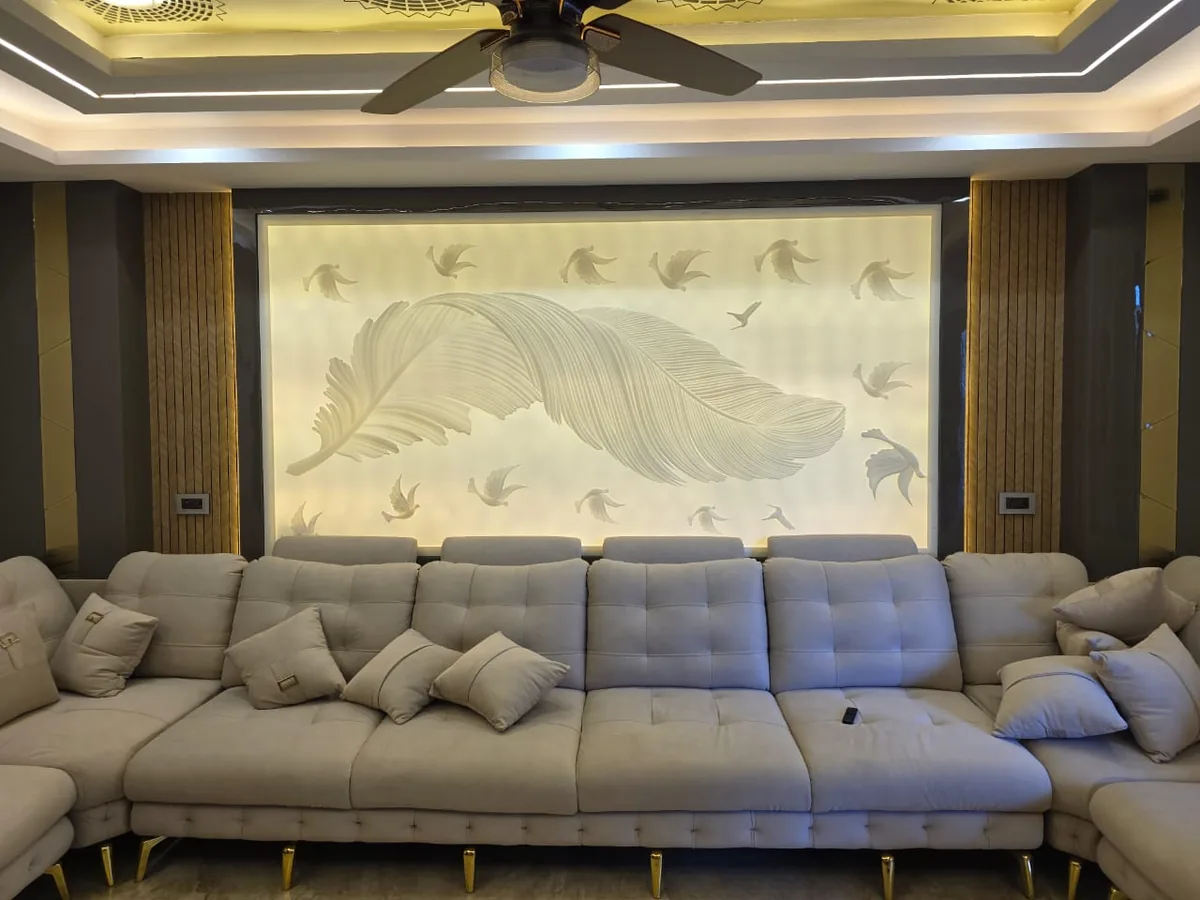
Layered lighting transforms a living room — ambient ceiling, accent wall lighting and warm table lamps create depth and atmosphere.
Feature Wall — The Focal Point Strategy
A feature wall creates instant visual focus and character in a living room. The most common mistake is making all four walls the same — a feature wall must be distinctly different to earn its name.
The simplest and most affordable approach. One wall in a bold colour — deep green, navy, terracotta — against neutral white or cream on the remaining three walls. Cost: ₹3,000–8,000.
Fluted panels, V-groove boards or solid wood battens create warmth and texture. Works in both traditional and contemporary interiors. Cost: ₹15,000–50,000+.
Natural stone or cultured stone cladding adds organic texture and permanence. Particularly effective in homes with high ceilings. Cost: ₹20,000–80,000+.
An MDF panel with concealed LED backlight creates dramatic depth. Can be combined with artwork, mirrors or decorative screens. Cost: ₹25,000–60,000.
A curated collection of artwork, photographs and mirrors arranged asymmetrically. Budget-friendly but requires careful curation to avoid looking chaotic.
A large mirror or mirrored panel doubles visual space and light. Best placed on North or East walls for Vastu — avoid South walls. Cost: ₹8,000–30,000.
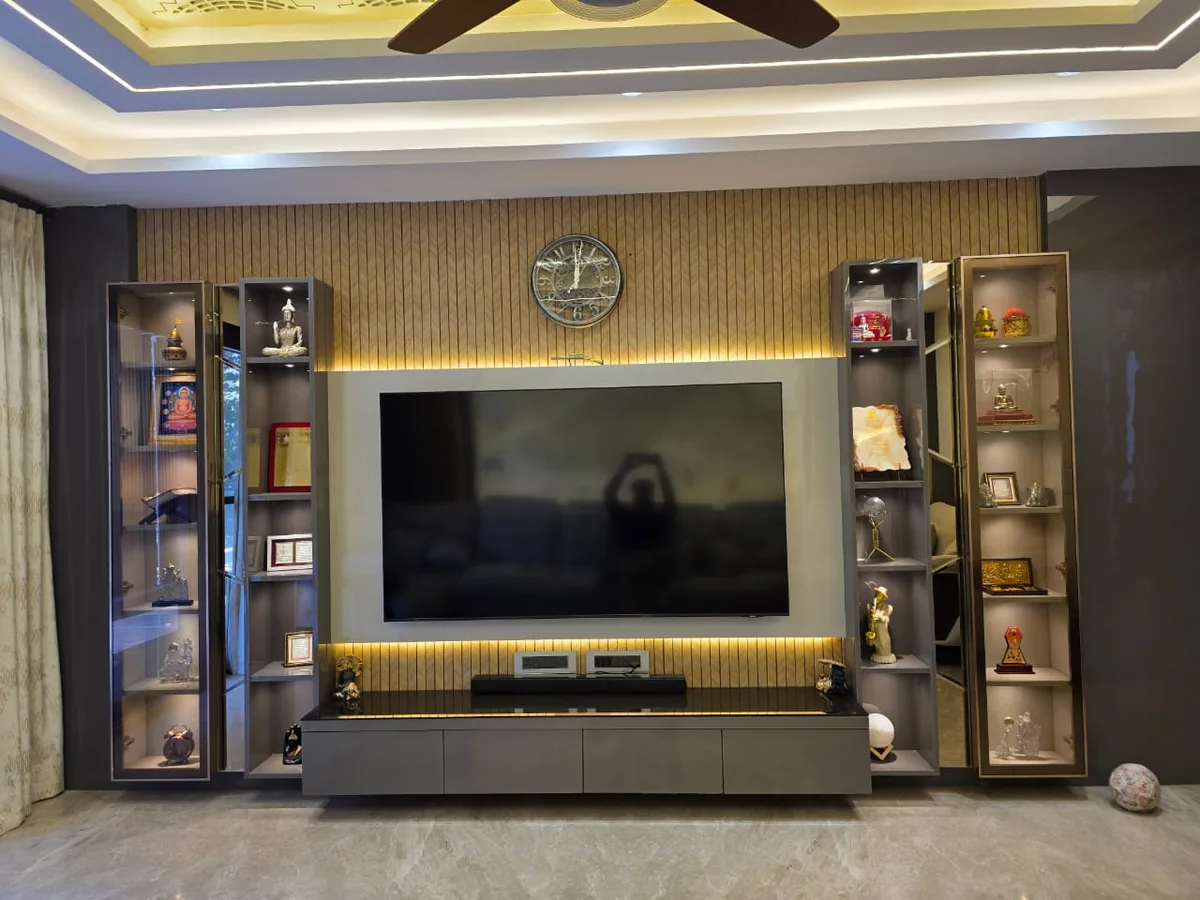
A backlit feature wall with custom TV unit — the most popular feature wall treatment for Indian living rooms in 2026.
Vastu for the Living Room — Complete Checklist
The living room has specific Vastu considerations beyond the room's directional placement. Here is the complete Vastu checklist for your living room:
| Element | Vastu Recommendation | Reason |
|---|---|---|
| Room Location in Home | North or East zone | Wealth and health energy flows inward |
| TV Placement | South or West wall | Viewers face North or East — auspicious directions |
| Sofa Placement | South or West side, facing North or East | Heavy furniture in stable zones |
| Main Sitting Direction | Face North or East while seated | Aligns with positive energy flow |
| Mirror | North or East wall only | Amplifies wealth and health energy |
| Water Feature | North or North-East corner | Water in Water zone — auspicious |
| Plants | North, East or South-East corners | Green plants in growth zones |
| Clutter | Never in North-East corner | Most sacred zone must remain light |
| Heavy Decor | South or West walls | Heavy elements in earth/stable zones |
| Colours | Light, warm neutrals with gold accents | Neutral base accepts all elemental energies |
Storage Solutions — Design that Hides Clutter
The number one enemy of a beautiful living room is clutter. In Indian homes — where living rooms serve as multi-functional spaces — intelligent storage design is not optional, it is essential.
- TV unit with closed shutters below — hides wires, set-top boxes, gaming consoles and remotes
- Built-in bookshelf in the study alcove or along one full wall — maximises vertical space
- Ottoman coffee table with internal storage — seating, surface, and storage in one piece
- Console table with drawers for entrance entry storage
- Floating shelves for books and decor — keep at least 40% empty for visual breathing room
- Closed storage for 70% of items, open display for 30% — the golden ratio for Indian homes
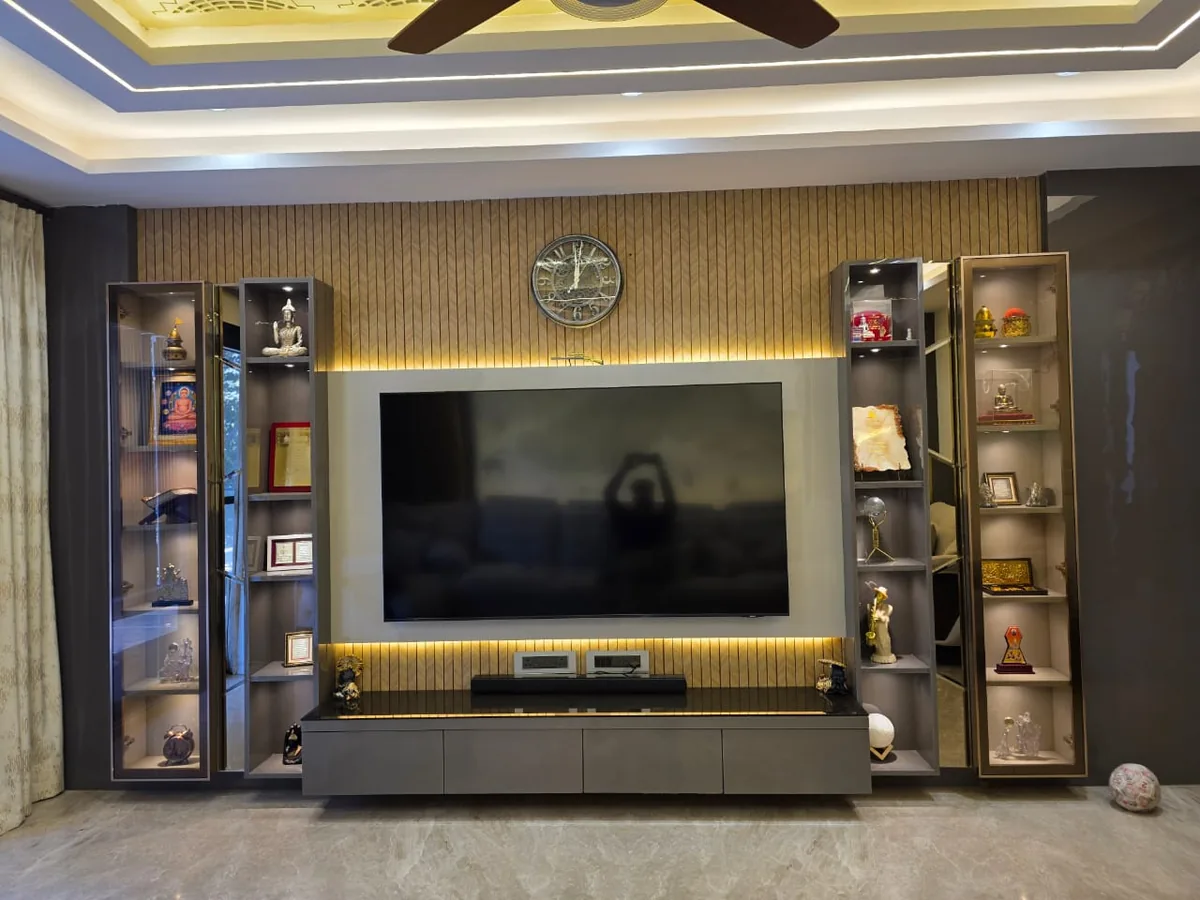
Intelligent storage design keeps the living room clutter-free — a custom TV unit with closed shutters below by DesigningAxis by Shivani.
Budget Guide — What Does a Living Room Interior Cost?
Realistic budgeting prevents disappointment. Here is Shivani Mathur's guide to living room interior costs in India in 2026:
| Budget Category | Total Budget | What's Included | What's Excluded |
|---|---|---|---|
| Essential | ₹1.5L – ₹3L | Paint, basic sofa, centre table, curtains, lighting | False ceiling, custom furniture, feature wall |
| Standard | ₹3L – ₹6L | Above + false ceiling, TV unit, better sofa, feature wall paint | Custom millwork, premium materials |
| Premium | ₹6L – ₹10L | Above + custom TV unit, premium sofa, backlit feature wall, quality lighting | Italian marble, imported furniture |
| Luxury | ₹10L – ₹20L+ | Custom everything — millwork, premium stone, bespoke furniture, designer lighting | Nothing — full scope |
- SPEND: Sofa — you use it every day, cheap sofas sag within 2 years
- SPEND: Lighting — dimmers and layered lighting transform the room for minimal cost
- SPEND: One statement piece — a quality centre table or a large piece of art anchors the room
- SAVE: Cushions and throws — refresh these seasonally for very little cost
- SAVE: Side tables — solid wood options at ₹3,000–8,000 look as good as expensive ones
- SAVE: Wall art — original prints by local artists look better than expensive reproductions
Frequently Asked Questions — Living Room Design
What is the ideal size for a living room in India?
For a 2BHK apartment, 180–250 sq ft is typical. For a 3BHK, 250–350 sq ft is common. In independent houses, living rooms range from 350 to 600+ sq ft. Design strategies vary significantly based on size — smaller rooms need space-maximising approaches, larger rooms need careful zoning and anchoring.
Which direction should the living room face according to Vastu?
North or East zones of the home are ideal for the living room in Vastu. North is governed by Kuber (wealth) and East by the Sun (health). A North or East-facing living room brings positive social energy and financial prosperity.
What colour is best for a living room in India?
Warm neutrals — beige, cream, warm white — work universally as base colours. Earthy gold, terracotta and deep jewel tones as accents add richness. For Vastu, avoid blood red and dark blue as primary living room colours.
How do I make a small living room look larger?
Use light colours, appropriately scaled furniture, mirrors on North or East walls, multi-level lighting, uncluttered surfaces, and vertical design elements. These techniques consistently make compact apartments feel significantly more spacious.
How much does a living room interior design cost in India?
A complete living room interior ranges from ₹1.5L (essential) to ₹20L+ (luxury) depending on scope and materials. DesigningAxis by Shivani provides transparent estimates based on your specific brief after a free initial consultation.
Ready to Design Your Perfect Home?
Book a personalised consultation with Shivani Mathur — interior designer and Vastu consultant with 20+ years of experience across Ghaziabad, Noida and Delhi NCR.
Need Professional Help?
Apply these principles with expert guidance. Shivani Mathur offers personalised interior design and Vastu consultations across Delhi NCR — interior designer in Noida or interior designer in Vasundhara.