The Pre-Purchase Vastu
Checklist — Land & Flats
What to verify before you finalise any agreement, token amount, or registry — a practical, on-site checklist by Shivani Mathur.
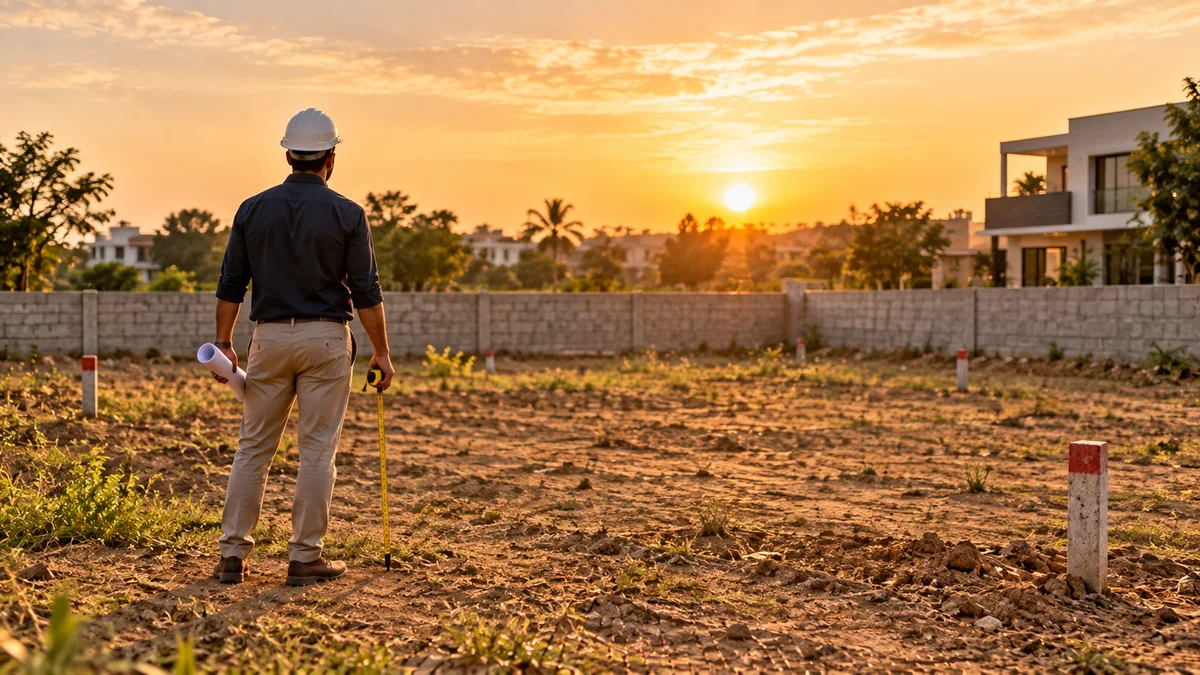
A pre-purchase site check is the one point in the process where a Vastu defect is still just information — not yet a problem you own.
Every Vastu correction gets harder and more expensive once the token amount is paid, the registry is done, or the flat is handed over. This checklist is built specifically for the window before any of that happens — while you can still walk away, negotiate, or simply choose a different unit.
Why This Check Happens Before You Buy
Run through this practical checklist before finalising any agreement, token amount, or registry — whether you're buying a plot, an independent house, or a ready-to-move flat. Some items apply mainly to land and independent houses; others apply directly to flats. The table below covers all six, and each is explained in more detail after it.
| Category | Correct Standard | Red Flag |
|---|---|---|
| Corner Angles | All corners close to 90°; South-West must be precise | Rounded, obtuse, or distorted South-West/North-East corners |
| Ground Elevation & Slope | Slopes down toward North and East; South and West higher | Ground sloping down toward South or West, pooling water improperly |
| Soil & Site Quality | Firm, solid soil; clean excavation | Loose, hollow, or marshy soil containing ash, coal, or debris |
| Water Body Placement | Wells, borewells, sumps in the North-East (Ishanya) | Underground tanks or borewells in South-West or South-East |
| Street / Road Behaviour | Clean approach roads from North or East | Dead-end roads (viddh) hitting the South-West or main entrance |
| Flat Internal Zoning | Master bedroom SW; Kitchen SE; Pooja room NE | Kitchen or toilet in the exact North-East, or toilet above the main door |
1. Corner Angles
Boundary or room corners should sit as close to a true 90 degrees as possible. The South-West corner carries the most weight in this check — it should be strictly precise, not just approximately square.
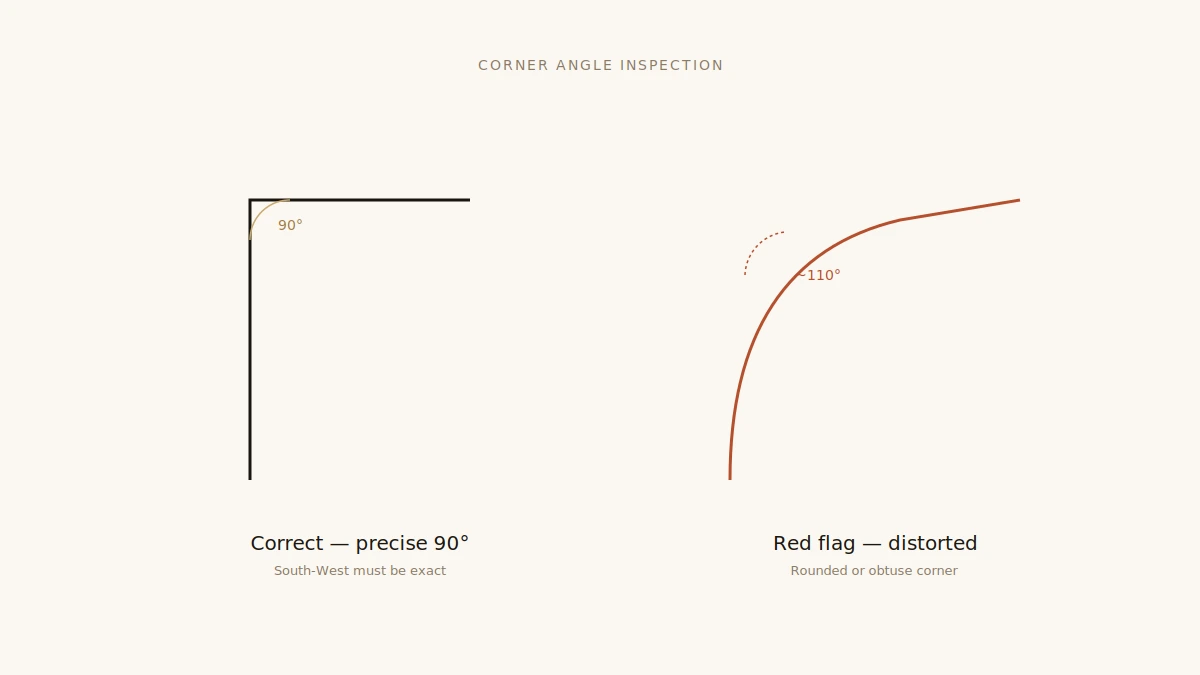
A precise 90° corner versus a rounded or obtuse one — the South-West corner is the one to check most carefully.
How to Check On-Site
You don't need surveying equipment for a first-pass check. Stand at each corner and look along both boundary lines — a genuine 90° corner looks visually sharp and clean. A corner that looks rounded, angled inward, or oddly bevelled is worth flagging for a proper measurement before you proceed.
2. Ground Elevation & Slope
Natural topography matters more than most buyers realise. The ideal slope runs downward toward the North and East, with the South and West sitting higher and heavier — this mirrors the same logic behind why the South-West is the master bedroom zone and the North-East is kept light and open.
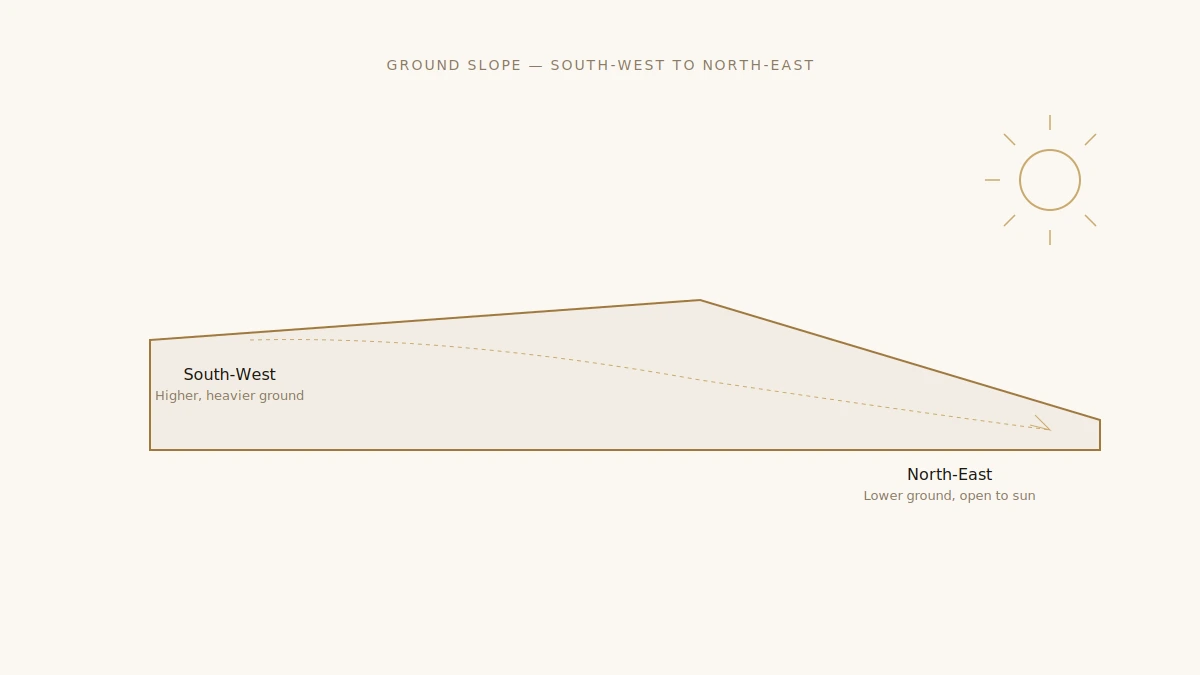
Ideal ground behaviour — higher, heavier ground in the South-West, sloping down toward an open North-East.
A red flag here is ground that slopes down toward the South or West, or that pools water improperly during rain. This is also a practical construction concern, not just a Vastu one — reversed drainage tends to cause real waterlogging problems later.
3. Soil & Site Quality (Bhumi Pariksha)
Traditional Vastu practice includes a soil test at the site — Bhumi Pariksha. The standard to look for is firm, solid ground; a natural excavation should reveal clean soil, stones, or moisture, not debris.

A genuine soil check at the site — firm, solid soil is the standard; loose, hollow, or marshy ground is the red flag.
The red flag is loose, hollow, or marshy soil, or soil containing ash, coal, hair, or bones — all traditionally treated as signs the land is unsuitable without significant remediation. In practice, this overlaps heavily with genuine structural engineering concerns, so it's worth raising with your builder or engineer as well as considering the Vastu view.
4. Water Body Placement
Wells, borewells, and underground sumps should sit in the North-East (Ishanya) zone of the plot. This is one of the more specific and checkable items on the list — ask directly where the water source is located relative to the plot's boundary.
"An underground water tank in the South-West is one of the harder defects to correct after construction, simply because moving it means digging up a structural corner of the building. If you're at the buying stage and the tank is already placed wrong, that's genuinely worth factoring into your decision — not something to defer to 'we'll fix it later'."
— Shivani Mathur, Vastu Consultant · 20 Years ExperienceThe red flag is a borewell or underground tank placed in the South-West or South-East instead.
5. Street & Road Behaviour
The approach road matters more than buyers often expect. A clean approach from the North or East, with clear surrounding pathways, is the standard to look for.
The red flag is an aggressive dead-end road, or a road that hits directly into the plot's South-West corner or main entrance — known as veedhi shula or viddh in traditional Vastu texts. This is treated as a genuinely significant defect, and unlike ground slope or soil quality, it's one that can't be corrected after the fact — the road's position relative to your plot is fixed.
6. Flat Internal Zoning
For apartment buyers specifically, this is the item that applies most directly. Check the floor plan against the ideal zoning before you buy, not after you've moved in.
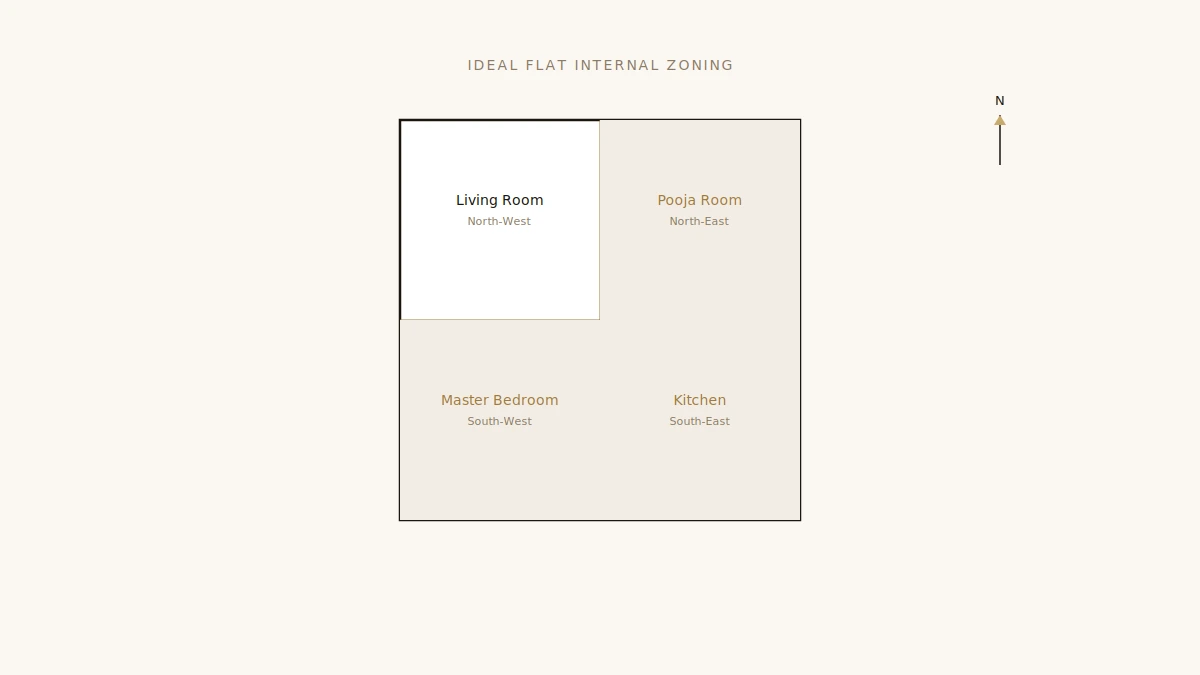
Ideal internal zoning — master bedroom in the South-West, kitchen in the South-East, pooja room in the North-East.
The standard is a master bedroom in the South-West, kitchen in the South-East, and pooja room in the North-East. The red flag is a kitchen or toilet placed in the exact North-East sector, or a toilet positioned directly above the main door on an upper floor — both are treated as significant, worth-checking-before-you-sign issues rather than minor details.
Frequently Asked Questions — Pre-Purchase Vastu Checklist
When exactly should I run this checklist — before or after paying a token amount?
Before. Once a token amount changes hands, most sellers and builders treat the deal as effectively committed, and negotiating on Vastu grounds afterward becomes much harder. Every item on this checklist is meant to be checked during your site visits, before any payment or agreement.
Can a Vastu consultant check these things for me, or do I need to do it myself first?
Both approaches work. Many clients do a first-pass check themselves using a checklist like this one, then bring Shivani Mathur in for a proper site or floor-plan consultation once they've shortlisted two or three options — that way the consultation time goes toward genuine finalists, not every listing they've seen.
What's the single biggest red flag on this list?
A distorted South-West corner and a road hitting the plot directly (viddh) are the two most consequential items, because both are structural to the land itself and cannot be corrected after construction. Ground slope and soil quality matter, but there is more flexibility to work around them. Corner angle and road behaviour are worth checking first.
I'm buying a ready-to-move flat, not land. Does the whole checklist still apply?
Most of it, in a modified form. You can't inspect ground slope or soil quality on the 8th floor of a tower, but corner angles (of the flat itself), water tank placement (check the building's overhead and underground tanks), and internal zoning apply directly and are worth checking on the floor plan before you buy.
Is it realistic to find a plot or flat that passes every single item?
Rarely, and that's not usually the goal. The purpose of a checklist like this is to know what you're compromising on, not to find a mythical perfect property. A flat with excellent internal zoning but a slightly imperfect corner is a very different decision than one with multiple major defects stacked together.
Shortlisted a Plot or Flat?
Get It Checked Before You Sign
Bring Shivani Mathur in once you've narrowed down to your top choices — a site visit or floor-plan review before you commit.
Need Professional Help?
Finalising a property in Ghaziabad, Noida, or Delhi NCR? Shivani Mathur offers on-site and floor-plan Vastu consultations — Vastu consultant in Ghaziabad or Vastu consultant in Noida.